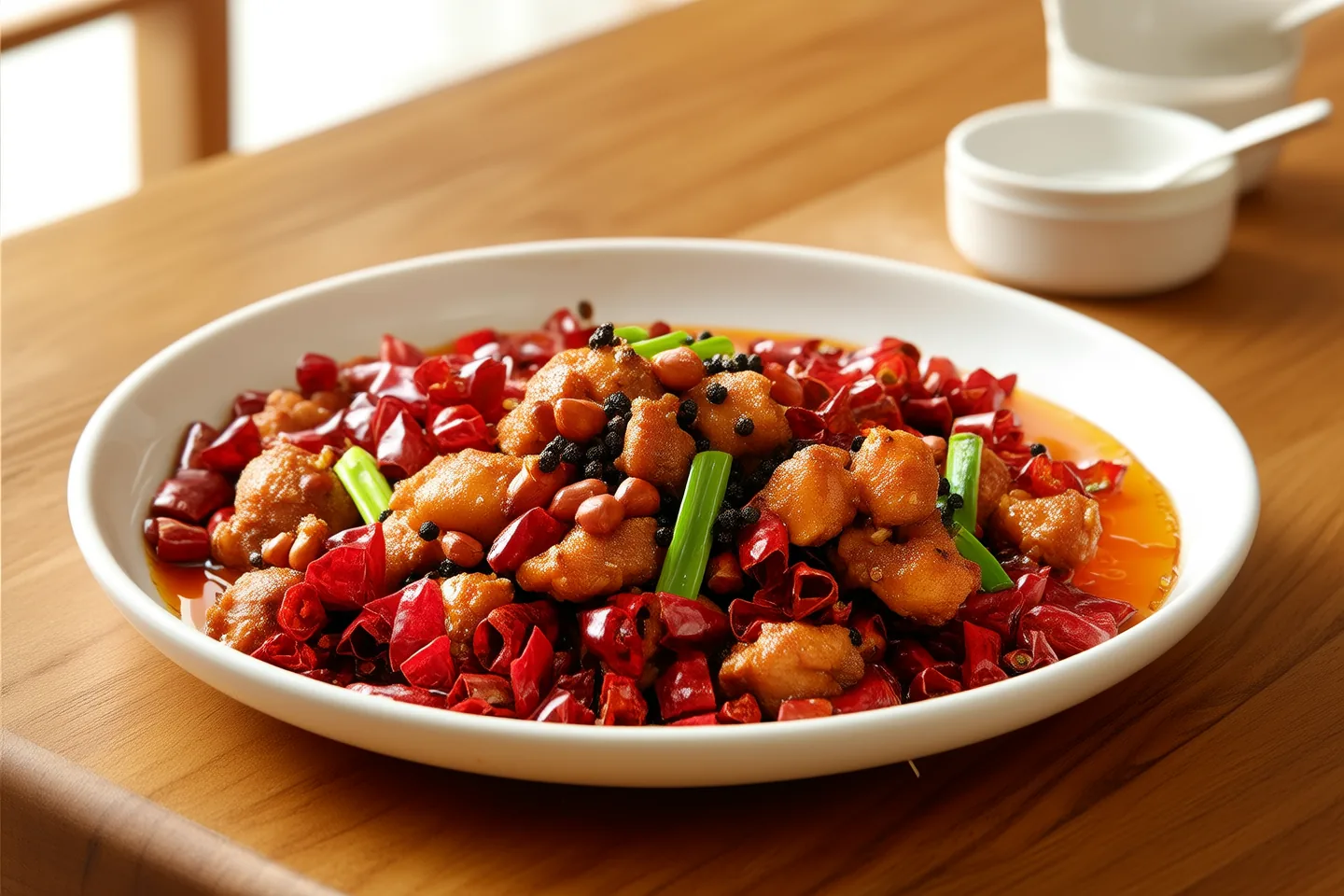
Kung Pao Chicken (宫保鸡丁)
宫保鸡丁 · gōng bǎo jī dīng
Named after Ding Baozhen, a Qing-dynasty governor (宫保 = his title). The real dish is not sweet-glazed — it's a salty-sour-spicy-numbing stir-fry with a vinegar-forward sauce. This home version stays true to that.
Recipe author: HǎoWèi Test Kitchen
Home-cooking research team
Reviewed by HǎoWèi editorial team · Last updated 2026-08-29
Ingredients
- boneless chicken thigh (or breast), diced 2 cm鸡腿肉/鸡胸🛒 local400 g
- cornstarch玉米淀粉🛒 local1 tbsp
- light soy sauce (for marinade)生抽🏮 asian1 tbsp
- Shaoxing wine料酒🏮 asian1 tbsp
- dried chilies, halved干辣椒🛒 local8-10
- Sichuan peppercorn花椒🏮 asian1 tsp
- scallions, cut into 2 cm sections大葱段🛒 local3 stalks
- garlic, sliced蒜片🛒 local3 cloves
- ginger, sliced姜片🛒 local1 tsp
- roasted peanuts (or cashews)花生米🛒 local60 g
- Chinkiang vinegar (or rice vinegar)香醋🏮 asian1.5 tbsp
- sugar白糖🛒 local1.5 tsp
- light soy sauce (for sauce)生抽🏮 asian1 tbsp
- cornstarch slurry (1 tsp starch + 1 tbsp water)水淀粉🛒 local2 tbsp total
- neutral oil食用油🛒 local3 tbsp
boneless chicken thigh (or breast), diced 2 cm: Thigh stays juicier; breast works if velvetted well.
dried chilies, halved: Remove seeds for milder heat.
roasted peanuts (or cashews): Add at the end for crunch — a classic.
🌶️ Adjust to your taste
Pick a level and we'll show exactly how much to change — no more "适量".
Spice level
Saltiness
Oiliness
Make it vegetarian
Instructions
1Marinate chicken: mix with soy, Shaoxing wine, and cornstarch. Rest 10 minutes (velveting — keeps it silky).
鸡丁上浆腌10分钟
🔍 Look for 10 分钟 · 10 minutesVisual: 鸡块均匀裹上一层薄薄的淀粉浆Chicken pieces are evenly coated in a thin starchy glaze
You know it's right when: 表面湿润但不滴落Glaze looks wet but not dripping
The cornstarch layer is what keeps the chicken juicy at high heat.
2Mix the sauce in a small bowl: vinegar, sugar, soy, and cornstarch slurry. Set aside.
提前调好碗汁
🔍 Look for 1 分钟 · 1 minuteVisual: 糖和淀粉完全溶解,无结块Sugar and starch fully dissolved, no lumps
You know it's right when: 碗汁均匀,微带乳白色Sauce is uniform, slightly cloudy
3Heat oil in a wok over medium. Add Sichuan peppercorns and dried chilies; fry 30 seconds until fragrant but NOT burned.
小火炸花椒辣椒
🔍 Look for Medium heat 30 秒 · 30 secondsVisual: 油面轻泛涟漪;辣椒变深红有光泽Oil lightly ripples; chilies turn deep red and glossy
You know it's right when: 香气扑鼻(麻+辣)——变黑前捞出Fragrant (prickly + spicy) — pull them before they go black
4Turn heat to high. Add chicken in a single layer and sear 1 minute without stirring, then stir-fry until mostly cooked.
大火快炒鸡丁
🔍 Look for High heat 2-3 分钟 · 2-3 minutesVisual: 鸡块边缘煎至金黄,彼此轻松分开Chicken edges sear golden, pieces separate easily
You know it's right when: 大部分表面无生粉红色;最厚处仍微带粉红No raw pink on most surfaces; still slightly pink in thickest pieces
5Add garlic, ginger, and scallion sections. Stir-fry 30 seconds until fragrant.
下葱姜蒜爆香
🔍 Look for High heat 30 秒 · 30 secondsVisual: 葱姜蒜油光发亮,香气四溢Aromatics glisten and release scent
You know it's right when: 蒜片边缘刚开始变色Garlic edges just start to color
6Pour in the sauce. Stir rapidly 20-30 seconds until it thickens and coats everything.
烹入碗汁
🔍 Look for High heat 20-30 秒 · 20-30 secondsVisual: 碗汁变得有光泽并挂在鸡块上Sauce turns glossy and clings to chicken
You know it's right when: 锅铲划过锅底留下清晰痕迹Clear trail left when spatula swipes the pan
7Off heat: fold in the peanuts. Serve immediately.
最后拌入花生
🔍 Look forVisual: 花生裹着光泽的酱汁,依然完整Peanuts coated in glossy sauce, still whole
You know it's right when: 花生依然酥脆Peanuts still crunchy
Tips
- · The vinegar-forward sauce is what separates authentic kung pao from the sweet American version.
- · Don't skip the Sichuan peppercorn — the numbing (má) contrast with the chili heat is the dish.
- · Too spicy? Remove chili seeds and use 6 chilies instead of 10.
- · Cashews make a luxurious swap for peanuts.
Sources & references
Quantities, technique notes, and substitution ratios are cross-checked against established Chinese cookery references and standard food-science sources.
- Read our editorial policy
- Fuchsia Dunlop, Land of Plenty: A Treasury of Authentic Sichuan Cooking
- USDA FoodData Central — ingredient nutrition and portion data
- Traditional Chinese family-kitchen practice and regional taste records
Common questions
Can I skip Shaoxing wine? What's the substitute?
Dry sherry is the closest 1:1 swap (fidelity ~80%). No sherry? Use a splash of white wine plus a little water, or just skip it and add a tiny extra pinch of sugar — the wine's job is depth and removing meat's gamey notes, and a good marinade covers most of it.
Source: HǎoWèi substitution engine
I can't find Sichuan peppercorns. What do I use?
Honestly, there is no true substitute — the numbing (má) sensation is unique. Best local approximation: 1/2 tsp black pepper + a little citrus zest for warmth and brightness. If you cook Sichuan food regularly, buy them online; they keep for months in an airtight jar.
Source: HǎoWèi substitution engine
It's too spicy. How do I tone it down?
Add a dairy element (a swirl of yogurt, milk, or a spoon of peanut butter) — dairy fat binds the capsaicin. Sugar or honey also helps balance heat. For next time: remove chili seeds (they hold most heat) or halve the dried chilies and add chili oil at the table instead.
Source: HǎoWèi flavor guide
Ingredient swaps
Can't find an Asian-market staple? Use these.
Swap: Shaoxing wine
→ dry sherry or mirin (less sweet)
Ratio: 1:1 · Both add the same warm fermented depth.
Swap: dried chilies, halved
→ red pepper flakes + whole cayenne (rehydrated)
Ratio: 1 tbsp : 1 tbsp · Use fewer for heat — dried chilies are mild.
Swap: Sichuan peppercorn
→ black peppercorn + pinch of lemon zest
Ratio: 1:1 · Loses the numbing, keeps some aroma.
Don't make these mistakes
The traps every home cook hits — and how to avoid them.
✗ Crowding the pan — ingredients steam instead of sear.
✓ Fix: Cook in batches; give each piece room to brown.
✗ Adding sauce too early — the wok cools and flavors dull.
✓ Fix: Push food up the wok wall, add sauce to the hot center, toss fast.
🥢 Ask HǎoWèi
Questions about technique, ingredients, substitutions, and flavor — answered from our verified cooking knowledge base.
What to serve with it
A complete Chinese dinner in one plan — pick one from each role.
What cooks say
Made this? Leave a note.
- No comments yet — be the first!
Cook next
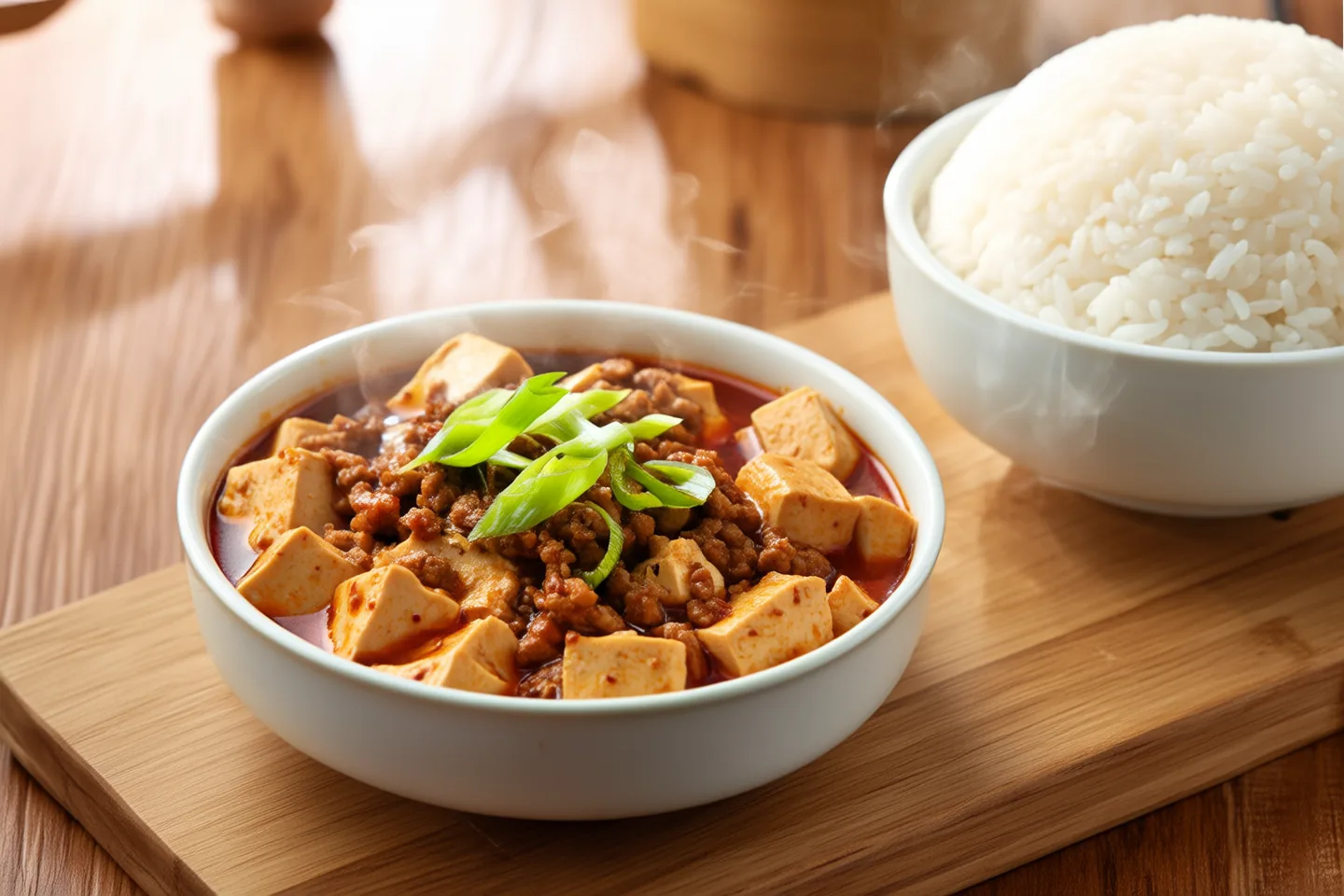
Mapo Tofu (麻婆豆腐)
麻婆豆腐 (Mapo Tofu (麻婆豆腐)) · má pó dòu fu
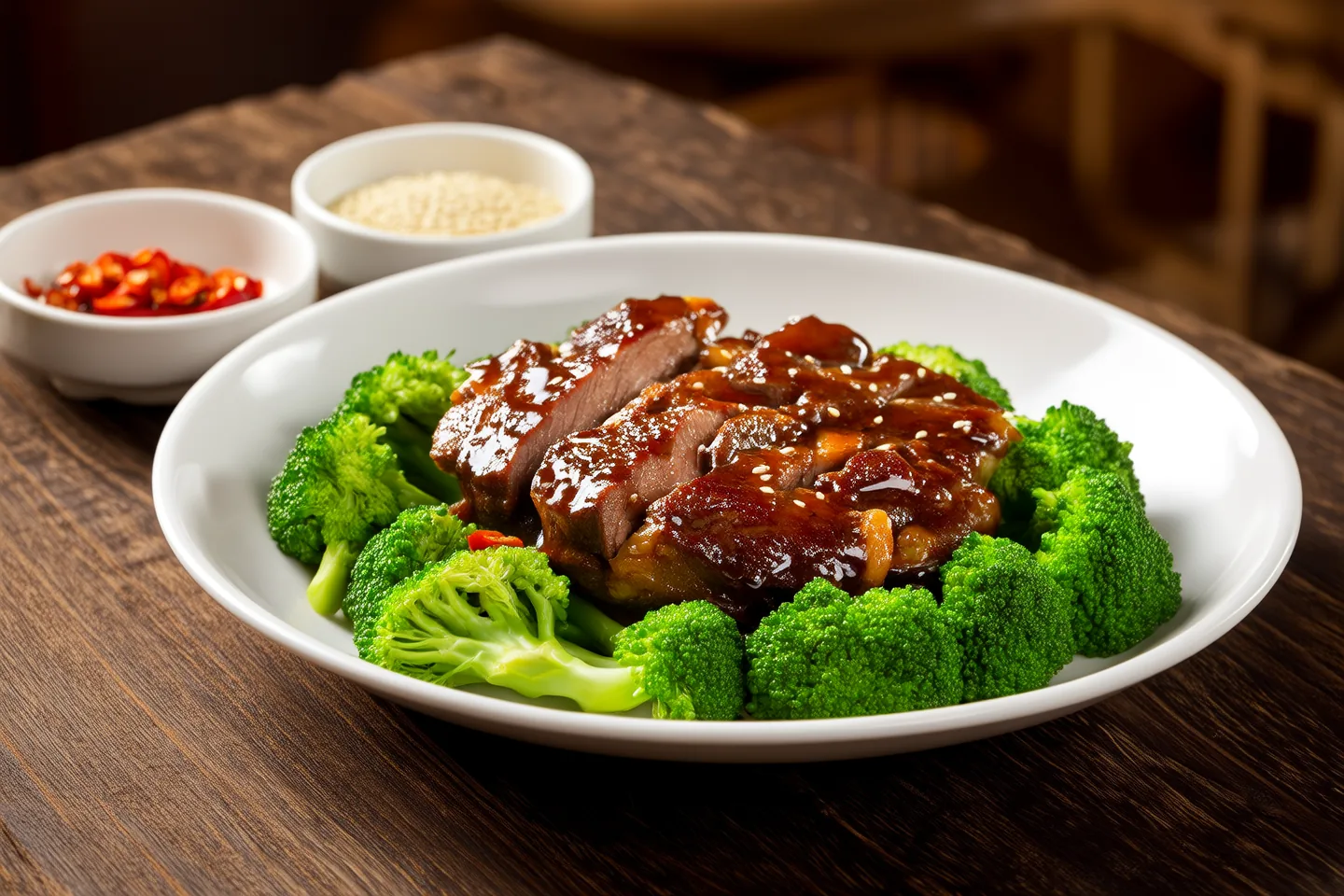
Beef & Broccoli (西兰花炒牛肉)
西兰花炒牛肉 (Beef & Broccoli (西兰花炒牛肉)) · xī lán huā chǎo niú ròu
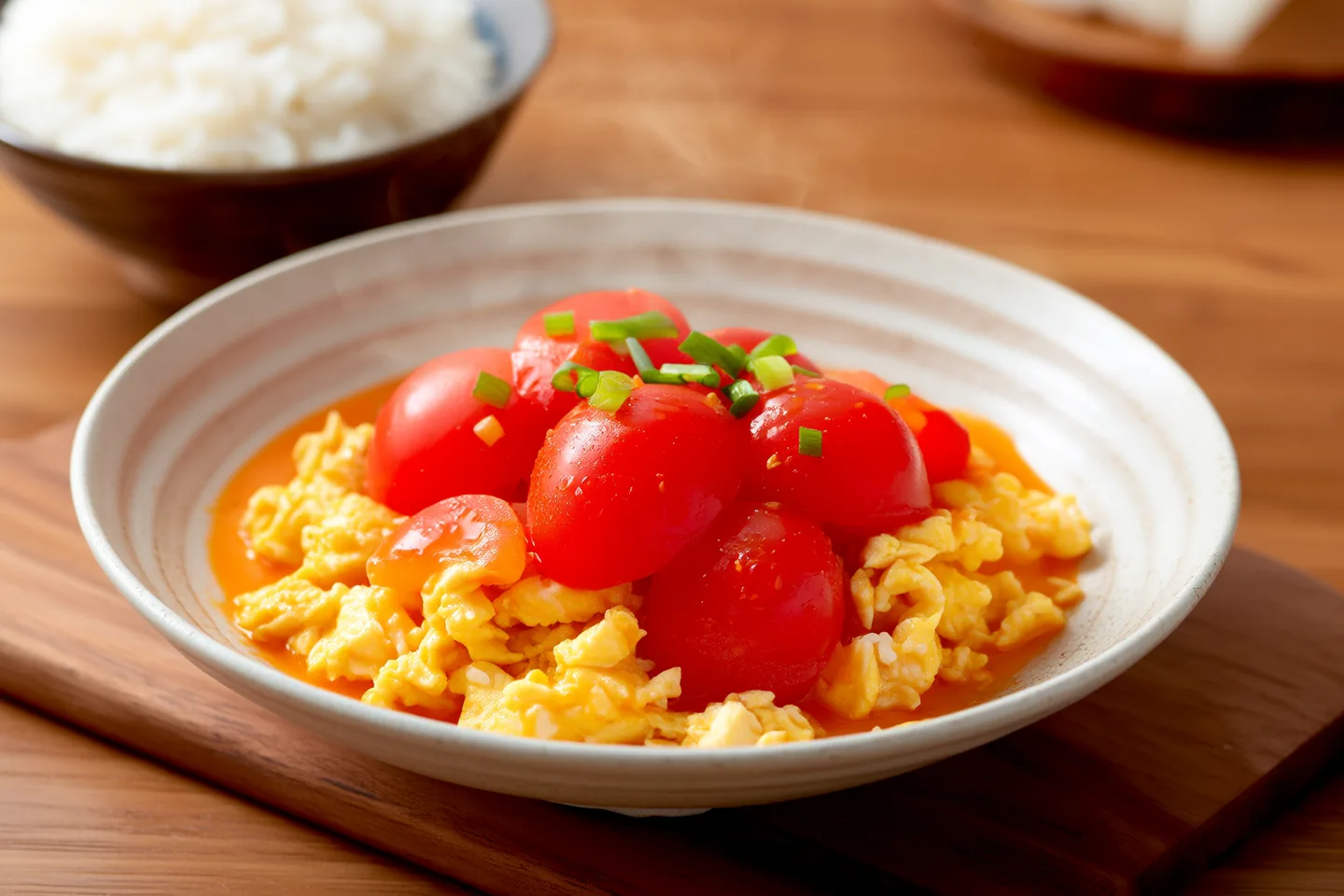
Tomato & Egg (番茄炒蛋)
番茄炒蛋 (Tomato & Egg (番茄炒蛋)) · fān qié chǎo dàn