
Tomato Cauliflower (番茄菜花)
番茄菜花 · fān qié cài huā
Cauliflower soaks up sauce better than almost any vegetable, which is why this tomato version turns a plain weeknight plate into something you want to eat with a spoon of rice. My mother added it to the rotation when the doctor said 'more vegetables' and nobody complained.
Recipe author: HǎoWèi Test Kitchen
Home-cooking research team
Reviewed by HǎoWèi editorial team · Last updated 2026-08-29
Ingredients
- cauliflower, cut in small florets菜花(切小朵)🛒 local500 g
- ripe tomatoes, diced成熟番茄(切丁)🛒 local3 medium (400 g)
- garlic, minced大蒜(切末)🛒 local12 g
- scallion, sliced葱(切片)🛒 local2 stalks
- light soy sauce生抽🏮 asian15 ml
- sugar白糖🛒 local4 g
- cornstarch slurry水淀粉🛒 local15 ml
🌶️ Adjust to your taste
Pick a level and we'll show exactly how much to change — no more "适量".
Spice level
Saltiness
Oiliness
Make it vegetarian
Instructions
1Bring a pot of salted water to a boil and blanch the cauliflower for 90 seconds. Drain well and pat dry.
🔍 Look for High heat 90 秒 · 90 secondsVisual: 菜花颜色更白亮,梗部略呈半透明。Florets turn a brighter white and the stem is slightly translucent.
You know it's right when: 刀尖插入菜梗略有阻力。A knife tip enters the stem with a little resistance.
Dry florets brown; wet florets steam. Do not skip the pat-down.
2Heat 1.5 tbsp oil over medium-high. Add the cauliflower in a single layer and sear 4 minutes, turning once, until golden patches appear.
🔍 Look for Medium-high 4 分钟 · 4 minutesVisual: 菜花平整面上出现焦褐斑点。Flat faces of the florets show toasted brown spots.
You know it's right when: 香气是坚果焦香,而不是生青味。It smells nutty and toasted rather than raw and grassy.
3Push the cauliflower up one side, add garlic and scallion to the oil, and fry 20 seconds until fragrant.
🔍 Look for Medium heat 20 秒 · 20 secondsVisual: 蒜末边缘呈浅金色,还没发褐。Garlic edges turn pale gold, not brown.
You know it's right when: 生蒜的辛辣味几秒内转为甜香。The sharp raw garlic smell turns sweet within seconds.
4Add tomato and sugar. Stir-fry 4 minutes until the tomato breaks down and coats the florets in red sauce.
🔍 Look for Medium-high 4 分钟 · 4 minutesVisual: 白色菜花被橙红酱汁染上条纹,锅内几乎没有余汁。White florets are streaked orange-red and the pan is nearly dry of liquid.
You know it's right when: 酱汁挂在菜花上而不是流走。Sauce clings to the florets instead of running off.
5Season with light soy sauce, add the slurry, and toss 30 seconds until glossy. Serve hot.
🔍 Look for Medium heat 30 秒 · 30 secondsVisual: 每朵菜花表面覆一层薄亮芡汁。A thin glossy film covers each floret.
You know it's right when: 倾斜锅时酱汁不再流走。The sauce no longer slides off when the pan is tilted.
Tips
- · Cut florets small and even — they cook through before the outside overcooks.
- · Skip the blanching only if you are willing to pan-roast longer over lower heat.
- · For a heartier version, add scrambled egg with the tomato.
Sources & references
Quantities, technique notes, and substitution ratios are cross-checked against established Chinese cookery references and standard food-science sources.
- Read our editorial policy
- Fuchsia Dunlop, Land of Plenty: A Treasury of Authentic Sichuan Cooking
- USDA FoodData Central — ingredient nutrition and portion data
- Traditional Chinese family-kitchen practice and regional taste records
Common questions
Is there a vegan substitute for oyster sauce?
Yes — 'mushroom oyster sauce' (often labeled vegetarian/vegan) is sold in most Asian grocers and increasingly in mainstream supermarkets. It behaves 1:1 and adds the same glossy umami. Watch labels if you're also gluten-free; most brands are GF, some aren't.
Source: HǎoWèi substitution engine
Why do you cook the aromatics (garlic/ginger) first on low heat?
Aromatics contain oils and sugars that turn bitter if scorched. Gentle heat (low-medium) lets garlic and ginger release their fragrance without browning too fast. If the pan is too hot, garlic goes bitter within seconds — that's why we always add aromatics first, before the main ingredients.
Source: Chinese Cooking Demystified technique library
What's the difference between light and dark soy sauce?
Light soy (生抽) is the everyday salty seasoning — thin and salty, used in most recipes. Dark soy (老抽) is thicker, darker, slightly sweet, and used mostly for color (braises, fried rice). If you only buy one, get light soy. For dark soy's color: 1 tbsp light soy + a pinch of sugar + a few drops of molasses.
Source: HǎoWèi pantry guide
🥢 Ask HǎoWèi
Questions about technique, ingredients, substitutions, and flavor — answered from our verified cooking knowledge base.
What to serve with it
A complete Chinese dinner in one plan — pick one from each role.
What cooks say
Made this? Leave a note.
- No comments yet — be the first!
Cook next
Dry Pot Cauliflower
干锅花菜 (Dry Pot Cauliflower) · gān guō huā cài

Tomato and Tofu (番茄豆腐)
番茄豆腐 (Tomato and Tofu (番茄豆腐)) · fān qié dòu fu
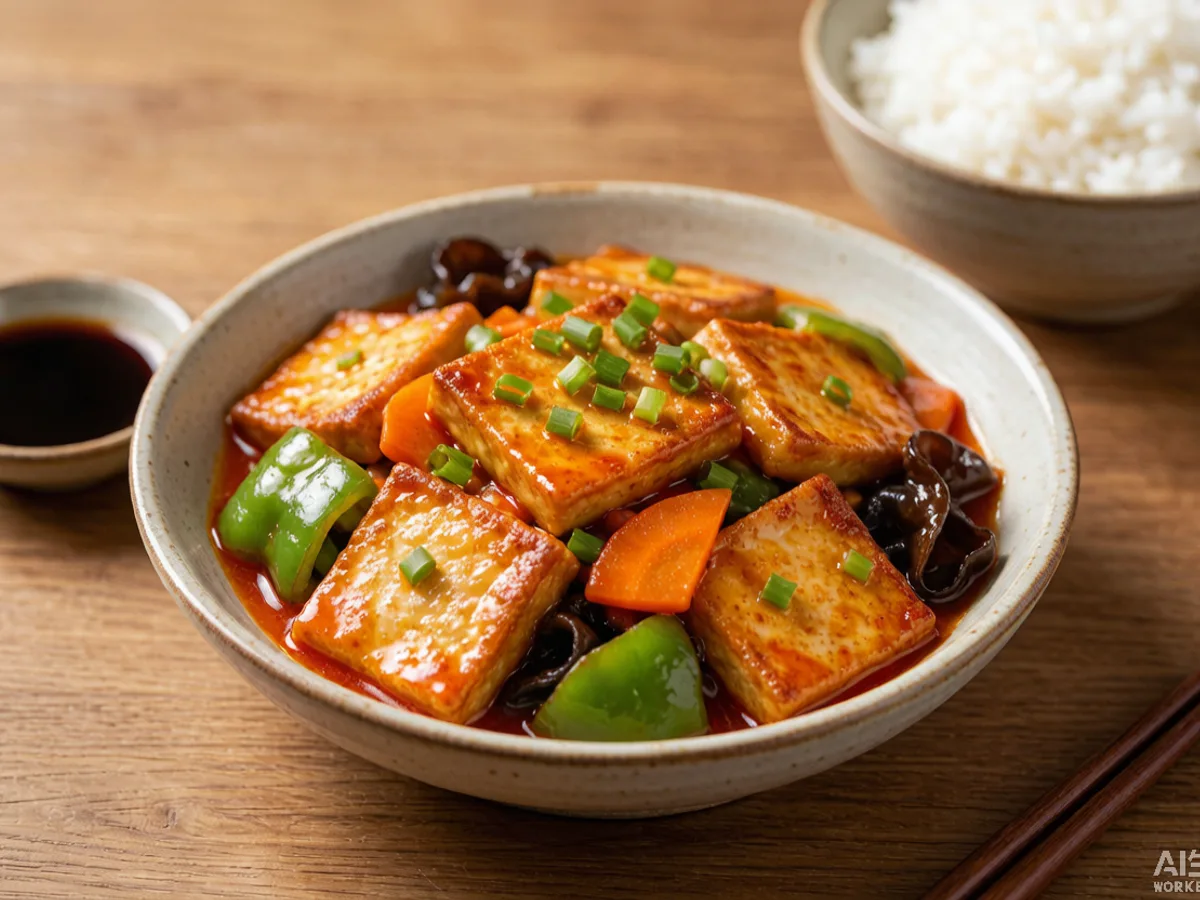
Home-style Tofu (家常豆腐)
家常豆腐 (Home-style Tofu (家常豆腐)) · jiā cháng dòu fu
Moo Shu Tofu (木须豆腐)
木须豆腐 (Moo Shu Tofu (木须豆腐)) · mù xū dòu fu