
Chinese-Style Tomato Pasta (中式番茄意面)
中式番茄意面 · zhōng shì fān qié yì miàn
Every Chinese kid grew up on some version of tomato-and-egg over rice. Swapping the rice for spaghetti keeps the flavor memory intact while solving the 'what do I do with half a box of pasta' problem.
Recipe author: HǎoWèi Test Kitchen
Home-cooking research team
Reviewed by HǎoWèi editorial team · Last updated 2026-08-29
Ingredients
- spaghetti意大利面🛒 local200 g
- ripe tomatoes, diced成熟番茄(切丁)🛒 local4 medium (550 g)
- eggs, beaten鸡蛋(打散)🛒 local2
- garlic, minced大蒜(切末)🛒 local15 g
- light soy sauce生抽🏮 asian15 ml
- sugar白糖🛒 local6 g
- toasted sesame oil香油🏮 asian5 ml
- scallion, chopped葱花🛒 local2 stalks
🌶️ Adjust to your taste
Pick a level and we'll show exactly how much to change — no more "适量".
Spice level
Saltiness
Oiliness
Make it vegetarian
Instructions
1Boil spaghetti in well-salted water until 1 minute short of the package time. Reserve 150 ml pasta water before draining.
🔍 Look for High heat 包装时间减 1 分钟 · package time minus 1 minuteVisual: 面条柔软但咬开中心仍有一点白芯。Noodle is pliable but still has a chalky white core when bitten.
You know it's right when: 咬断时是脆断而不是拉长。It snaps rather than stretches when you bite a strand.
2Heat 1.5 tbsp oil over medium-high. Add tomato and sugar, stir-fry 5 minutes until a thick, deep red paste forms.
🔍 Look for Medium-high 5 分钟 · 5 minutesVisual: 体积缩减约三分之一,颜色变砖红,边缘析油。Mass reduces by about a third and turns brick red; oil pools at the edge.
You know it's right when: 锅铲划过留下清晰且保持的痕迹。A spatula dragged through leaves a clean line that holds.
3Add garlic and light soy sauce, cook 30 seconds until fragrant, then pour in the beaten egg and let it set before folding.
🔍 Look for Medium heat 约 1 分钟 · about 1 minuteVisual: 蛋液在红酱中形成柔软蛋花。Egg forms soft ribbons through the red sauce.
You know it's right when: 蒜香转为坚果香而非辛辣;蛋面变哑光。Garlic smells nutty, not sharp; egg surface turns matte.
4Add the drained pasta with 100 ml pasta water. Toss over medium heat 90 seconds until the sauce turns glossy and clings.
🔍 Look for Medium heat 90 秒 · 90 secondsVisual: 酱汁均匀裹住每根面条,而不是积在锅底。Sauce coats each strand instead of pooling at the bottom of the pan.
You know it's right when: 提起面条时酱汁呈缓慢的乳状细流。When you lift the tongs the sauce drips in a slow, creamy ribbon.
5Off the heat, add sesame oil and scallion, and add the remaining pasta water if it looks dry.
🔍 Look for Low heat 30 秒 · 30 secondsVisual: 面条油亮松散,不结团。Noodles look glossy and loose, not clumped.
You know it's right when: 夹子能顺畅穿过面条无阻力。Tongs slide through the pasta without resistance.
Tips
- · Pasta water is the emulsifier — its starch binds the tomato paste to the noodles.
- · Soy sauce replaces salt and adds the Chinese umami backbone; do not skip it.
- · Undercook the pasta by a minute; it finishes in the sauce.
Sources & references
Quantities, technique notes, and substitution ratios are cross-checked against established Chinese cookery references and standard food-science sources.
- Read our editorial policy
- Fuchsia Dunlop, Land of Plenty: A Treasury of Authentic Sichuan Cooking
- USDA FoodData Central — ingredient nutrition and portion data
- Traditional Chinese family-kitchen practice and regional taste records
Common questions
Is there a vegan substitute for oyster sauce?
Yes — 'mushroom oyster sauce' (often labeled vegetarian/vegan) is sold in most Asian grocers and increasingly in mainstream supermarkets. It behaves 1:1 and adds the same glossy umami. Watch labels if you're also gluten-free; most brands are GF, some aren't.
Source: HǎoWèi substitution engine
What's the difference between light and dark soy sauce?
Light soy (生抽) is the everyday salty seasoning — thin and salty, used in most recipes. Dark soy (老抽) is thicker, darker, slightly sweet, and used mostly for color (braises, fried rice). If you only buy one, get light soy. For dark soy's color: 1 tbsp light soy + a pinch of sugar + a few drops of molasses.
Source: HǎoWèi pantry guide
Why do you cook the aromatics (garlic/ginger) first on low heat?
Aromatics contain oils and sugars that turn bitter if scorched. Gentle heat (low-medium) lets garlic and ginger release their fragrance without browning too fast. If the pan is too hot, garlic goes bitter within seconds — that's why we always add aromatics first, before the main ingredients.
Source: Chinese Cooking Demystified technique library
🥢 Ask HǎoWèi
Questions about technique, ingredients, substitutions, and flavor — answered from our verified cooking knowledge base.
What to serve with it
A complete Chinese dinner in one plan — pick one from each role.
What cooks say
Made this? Leave a note.
- No comments yet — be the first!
Cook next
Tomato Egg Noodles (番茄鸡蛋面)
番茄鸡蛋面 (Tomato Egg Noodles (番茄鸡蛋面)) · fan qie ji dan mian

Tomato and Tofu (番茄豆腐)
番茄豆腐 (Tomato and Tofu (番茄豆腐)) · fān qié dòu fu
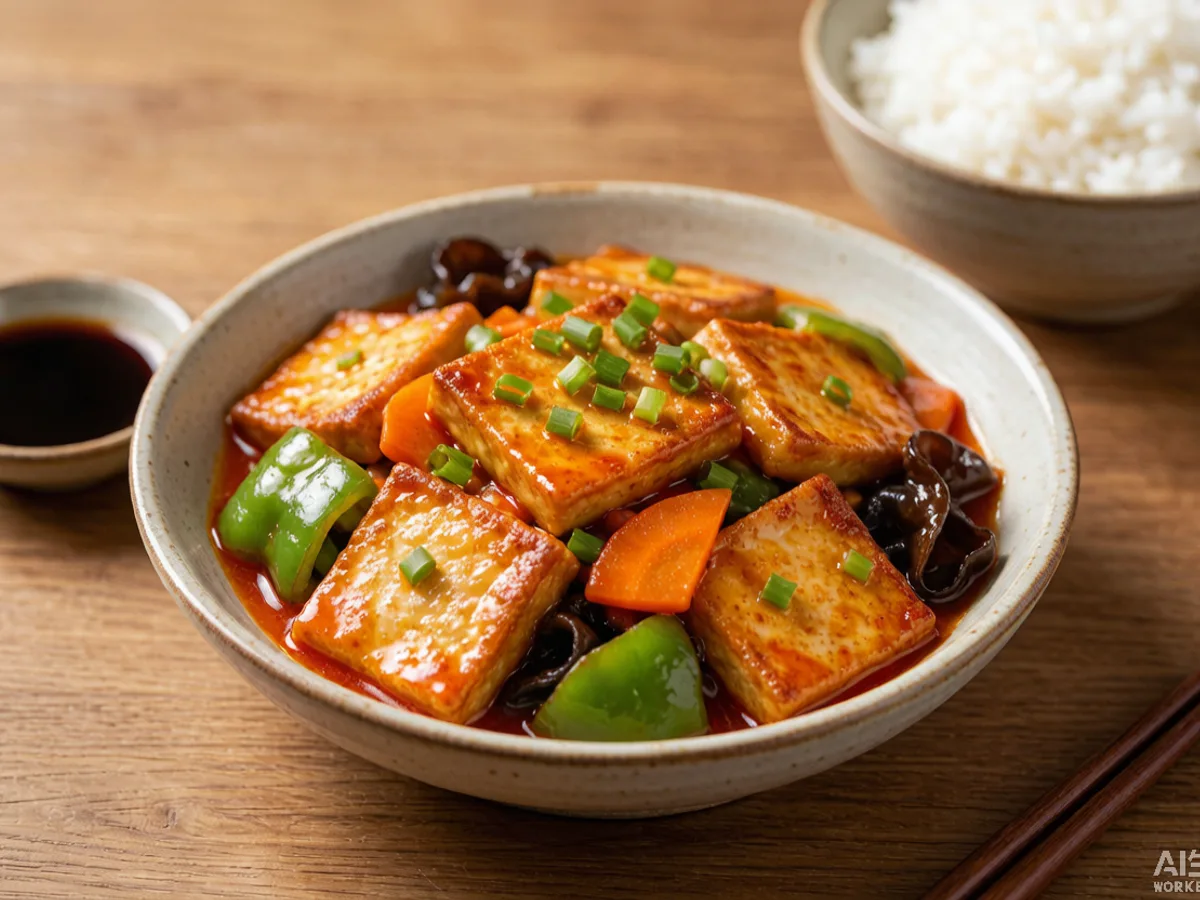
Moo Shu Tofu (木须豆腐)
木须豆腐 (Moo Shu Tofu (木须豆腐)) · mù xū dòu fu