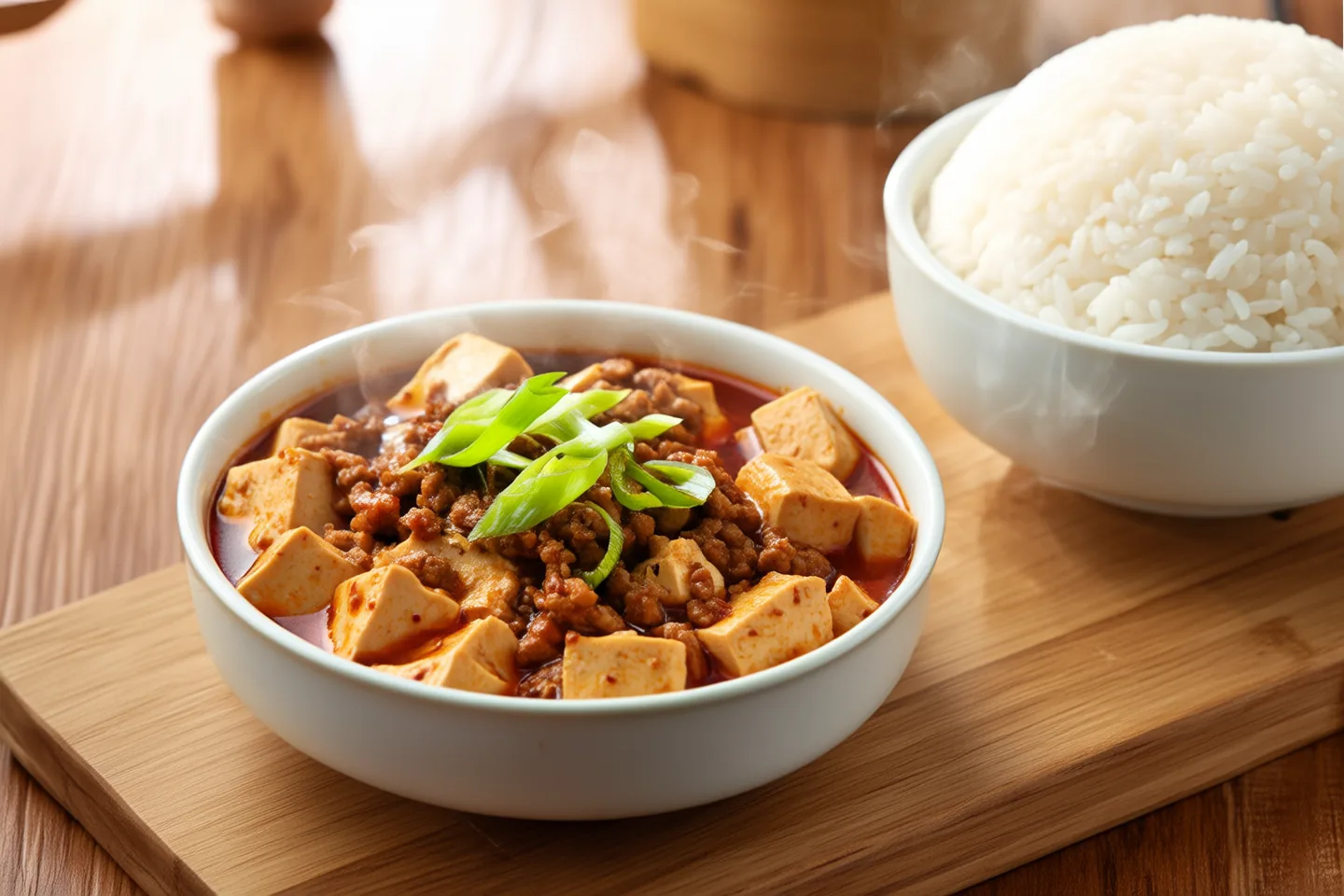
Mapo Frog Legs
麻婆蛙腿 · má pó wā tuǐ
Mapo frog legs is a Sichuan specialty that took the original mapo beancurd concept and applied it to frog. The result is incredibly tender with a signature numbing-spicy sauce.
Recipe author: HǎoWèi Test Kitchen
Home-cooking research team
Reviewed by HǎoWèi editorial team · Last updated 2026-08-29
Ingredients
- frog legs, halved牛蛙腿🛒 local400 g
- doubanjiang (spicy broad bean paste)郫县豆瓣酱🏮 asian2 tbsp
- garlic cloves, minced大蒜,切末🛒 local4 cloves
- fermented black beans, chopped豆豉🏮 asian1 tbsp
- Sichuan peppercorns, ground花椒粉🏮 asian1 tsp
- cornstarch玉米淀粉🛒 local1 tbsp
🌶️ Adjust to your taste
Pick a level and we'll show exactly how much to change — no more "适量".
Spice level
Saltiness
Oiliness
Make it vegetarian
Instructions
1Marinate frog legs with 1 tbsp Shaoxing wine and a pinch of salt for 10 minutes. Coat with cornstarch.
裹粉要薄
2Heat oil in a wok over high heat. Fry frog legs for 2 minutes until golden. Remove and drain.
快炸锁汁
🔍 Look for High heat 2 分钟 · 2 minutesVisual: 牛蛙腿变金黄Frog legs turn golden
You know it's right when: 油剧烈冒泡Oil bubbles vigorously
3In the same wok, sauté doubanjiang, garlic, and fermented black beans for 30 seconds until fragrant.
炒出红油
4Add 200ml water and bring to a boil. Return frog legs and simmer for 5 minutes.
入味
🔍 Look for Medium heat 5 分钟 · 5 minutesVisual: 酱汁变稠包裹牛蛙腿Sauce thickens and coats frog legs
You know it's right when: 酱汁收浓Sauce reduces and clings
5Sprinkle with Sichuan peppercorn powder and chopped scallions. Serve with steamed rice.
花椒粉最后放
Tips
- · Don't overcook frog legs — they turn rubbery.
- · Use good quality doubanjiang for authentic flavor.
- · The sauce should be thick and clingy, not watery.
Sources & references
Quantities, technique notes, and substitution ratios are cross-checked against established Chinese cookery references and standard food-science sources.
- Read our editorial policy
- Fuchsia Dunlop, Land of Plenty: A Treasury of Authentic Sichuan Cooking
- USDA FoodData Central — ingredient nutrition and portion data
- Traditional Chinese family-kitchen practice and regional taste records
Common questions
It's too spicy. How do I tone it down?
Add a dairy element (a swirl of yogurt, milk, or a spoon of peanut butter) — dairy fat binds the capsaicin. Sugar or honey also helps balance heat. For next time: remove chili seeds (they hold most heat) or halve the dried chilies and add chili oil at the table instead.
Source: HǎoWèi flavor guide
I can't find Sichuan peppercorns. What do I use?
Honestly, there is no true substitute — the numbing (má) sensation is unique. Best local approximation: 1/2 tsp black pepper + a little citrus zest for warmth and brightness. If you cook Sichuan food regularly, buy them online; they keep for months in an airtight jar.
Source: HǎoWèi substitution engine
Why do you cook the aromatics (garlic/ginger) first on low heat?
Aromatics contain oils and sugars that turn bitter if scorched. Gentle heat (low-medium) lets garlic and ginger release their fragrance without browning too fast. If the pan is too hot, garlic goes bitter within seconds — that's why we always add aromatics first, before the main ingredients.
Source: Chinese Cooking Demystified technique library
🥢 Ask HǎoWèi
Questions about technique, ingredients, substitutions, and flavor — answered from our verified cooking knowledge base.
What to serve with it
A complete Chinese dinner in one plan — pick one from each role.
What cooks say
Made this? Leave a note.
- No comments yet — be the first!