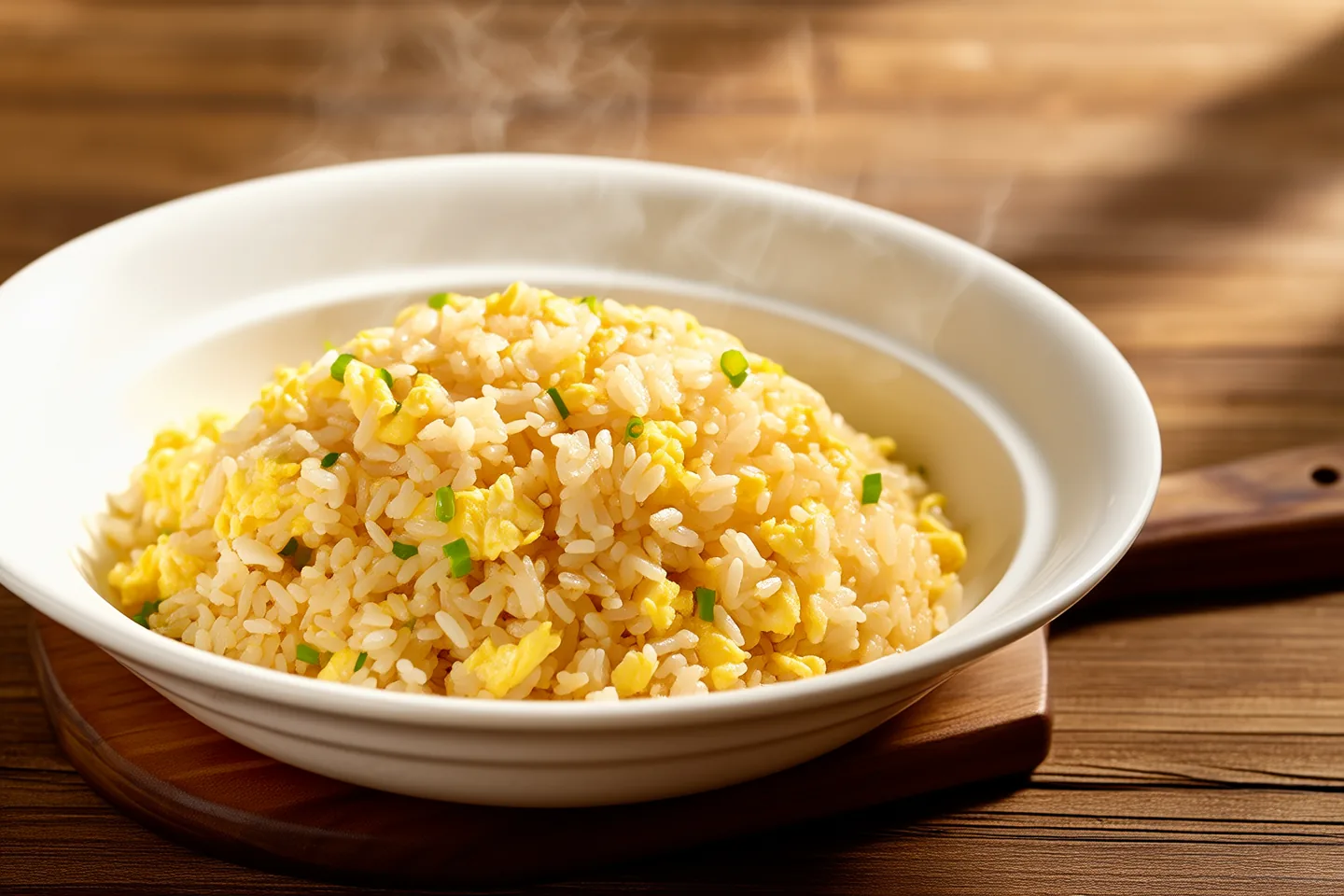
Cured Meat Fried Rice
腊味炒饭 · là wèi chǎo fàn
Lap cheong is winter in a sausage: pork and fat, sugar and rose-scented liquor, air-dried until it goes firm and translucent at the edges. In fried rice you barely need to season it — the sausage renders sweet, smoky orange fat that coats every grain, and anything you add on top of that is just noise.
Recipe author: HǎoWèi Test Kitchen
Home-cooking research team
Reviewed by HǎoWèi editorial team · Last updated 2026-08-29
Ingredients
- cooked rice, cold and day-old米饭,隔夜冷饭🛒 local450 g
- Chinese sausage (lap cheong)腊肠🏮 asian120 g
- large eggs, beaten鸡蛋,打散🛒 local100 g
- frozen green peas冷冻青豆🛒 local70 g
- carrot, small dice胡萝卜,切小丁🛒 local60 g
- napa cabbage, shredded大白菜,切丝🏮 asian120 g
- scallion, thinly sliced小葱,切葱花🛒 local30 g
- light soy sauce生抽🏮 asian10 ml
- white pepper白胡椒粉🛒 local1 g
- neutral oil食用油🛒 local15 ml
Chinese sausage (lap cheong): Vacuum-packed lap cheong is sold year-round at Chinese grocers; Spanish chorizo is the closest supermarket substitute
napa cabbage, shredded: Adds sweetness and keeps the dish from feeling too rich
light soy sauce: The sausage is salty and sweet — season carefully at the end
neutral oil: You may need less — the sausage renders a lot of fat
🌶️ Adjust to your taste
Pick a level and we'll show exactly how much to change — no more "适量".
Spice level
Saltiness
Oiliness
Make it vegetarian
Instructions
1Steam or microwave the sausages on high for 4–5 minutes until just firm and slightly glossy. Cool 2 minutes, then slice into 5 mm rounds and dice.
腊肠蒸软切丁
🔍 Look for High heat 5 分钟 · 5 minutesVisual: 腊肠略微鼓起,内部肥肉由不透明乳白转为半透明;切片不散The sausage has plumped slightly and the fat inside has turned from opaque white to translucent; slices hold their shape
You know it's right when: 刀切下去利落,肠衣不会和肉馅分离A knife goes through cleanly without the casing tearing away from the filling
Steaming first softens the sausage so it dices cleanly and renders its fat faster in the wok.
2Heat a dry wok over medium. Add the sausage dice and render for 2 minutes, stirring, until fat runs out and the edges caramelise. Lift out the dice, keep the orange fat.
煸出腊肠油
🔍 Look for Medium heat 2 分钟 · 2 minutesVisual: 锅底积起一层清亮橙色油脂,肠丁边缘转深红木色;油脂带甜香烟熏味A pool of clear orange fat has collected and the dice have dark mahogany edges; the fat smells sweet and smoky
You know it's right when: 肠丁持续作响,周围油脂明显冒泡The dice sizzle steadily and the fat is visibly bubbling around them
3Use the rendered fat to scramble the eggs over high heat for 20 seconds. Remove and set aside with the sausage.
腊肠油炒蛋
🔍 Look for High heat 30 秒 · 30 secondsVisual: 蛋液蓬松并被橙油染成浅金;仍带光泽,无焦黄Egg is puffed and pale gold from the orange fat; still slightly glossy, no browning
You know it's right when: 整块软嫩地铲出,锅底只留薄薄一层油膜It lifts out in one soft mass and the wok bottom is left only lightly filmed
4Add carrot and peas to the wok and stir-fry 90 seconds over high heat, then add the napa cabbage for 45 seconds.
炒蔬菜
🔍 Look for High heat 2 分钟 · 2 minutesVisual: 胡萝卜油亮橙红,青豆鲜绿,白菜塌软成半透明浅黄,锅底不积水Carrot is glossy orange, peas bright green, cabbage has wilted to translucent pale yellow with no water in the wok
You know it's right when: 白菜出了香味但没出水——是塌软不是煮烂The cabbage has released its smell but not its liquid — it should wilt, not stew
5Add the cold rice and press-and-fold 2–3 minutes until the grains are separate and every one is coated in orange fat.
炒饭上色
🔍 Look for High heat 3 分钟 · 3 minutesVisual: 米饭转为暖琥珀橙色,油亮但干爽;粒粒独立流动Rice has turned a warm amber-orange and looks glossy but dry; grains move independently
You know it's right when: 锅里爆响,气味是烟熏甜香而非水汽味The wok crackles and the smell is smoky-sweet rather than steamy
6Return the sausage and egg, add white pepper and taste before adding soy sauce. Toss 30 seconds, then off the heat fold in the scallion.
合炒收尾
🔍 Look for High heat 1 分钟 · 1 minuteVisual: 琥珀色米粒间嵌着红木色腊肠丁、浅色蛋块与翠绿葱花;盘底不积油Amber grains studded with mahogany sausage cubes, pale egg and green scallion; no free oil pools on the plate
You know it's right when: 每勺同时有甜、烟熏与咸味,腊肠弹牙但不发硬Each spoonful tastes sweet, smoky and salty at once, and the sausage is chewy but not hard
Tips
- · Render the sausage in a dry wok first and use its fat to fry everything else. That fat is the flavour of the dish.
- · Taste before adding soy sauce. Lap cheong is already salted and sugared; oversalting is the usual mistake.
- · Add cabbage or another mild green. Without it, cured meat fried rice is very rich.
Sources & references
Quantities, technique notes, and substitution ratios are cross-checked against established Chinese cookery references and standard food-science sources.
- Read our editorial policy
- Fuchsia Dunlop, Land of Plenty: A Treasury of Authentic Sichuan Cooking
- USDA FoodData Central — ingredient nutrition and portion data
- Traditional Chinese family-kitchen practice and regional taste records
Common questions
Is there a vegan substitute for oyster sauce?
Yes — 'mushroom oyster sauce' (often labeled vegetarian/vegan) is sold in most Asian grocers and increasingly in mainstream supermarkets. It behaves 1:1 and adds the same glossy umami. Watch labels if you're also gluten-free; most brands are GF, some aren't.
Source: HǎoWèi substitution engine
What's the difference between light and dark soy sauce?
Light soy (生抽) is the everyday salty seasoning — thin and salty, used in most recipes. Dark soy (老抽) is thicker, darker, slightly sweet, and used mostly for color (braises, fried rice). If you only buy one, get light soy. For dark soy's color: 1 tbsp light soy + a pinch of sugar + a few drops of molasses.
Source: HǎoWèi pantry guide
Why do you cook the aromatics (garlic/ginger) first on low heat?
Aromatics contain oils and sugars that turn bitter if scorched. Gentle heat (low-medium) lets garlic and ginger release their fragrance without browning too fast. If the pan is too hot, garlic goes bitter within seconds — that's why we always add aromatics first, before the main ingredients.
Source: Chinese Cooking Demystified technique library
🥢 Ask HǎoWèi
Questions about technique, ingredients, substitutions, and flavor — answered from our verified cooking knowledge base.
What to serve with it
A complete Chinese dinner in one plan — pick one from each role.
What cooks say
Made this? Leave a note.
- No comments yet — be the first!