Kids chinese food usually fails for one boring reason: the plate arrives too spicy, too bony, or too unfamiliar, and the child opts out. Cooking twice is not the answer either. Most Chinese home cooking already has a mild version inside it, and chinese food for kids is mostly a question of which ten dishes you reach for and where the chilli goes. Below are those ten: tomato, egg, corn and soft starch, easy chinese meals for children that one person cooks once and everybody else eats.
What makes chinese food for kids work
Three things decide whether a dish survives contact with a seven-year-old, and none of them is the recipe. Spice level, how much work the food takes to eat, and whether it looks like something recognisable. Get those right and you can cook one meal for the table instead of a separate portion.
- Mild before interesting. Chilli oil and whole Sichuan peppercorns go on the table in a small dish, not into the wok. Adults add them at the bowl; children are never asked to pick anything out.
- Cut for a fork or a spoon. Diced pork beats a chop, a meatball beats a slice, and anything you can spear with a chopstick in one motion gets eaten.
- One familiar anchor. Rice, a steamed bun, or noodles that look like noodles. A child who recognises the starch will usually try the thing next to it.
- Sauce on the side where possible. Sweet and sour pork tossed in its sauce goes soggy anyway; letting each person dip keeps the crisp version available.
Ten easy chinese meals for children, in cooking order
Ordered by how quickly they come together and how likely they are to be eaten, not by region. Start at the top and work down over a few weeks.
- Tomato and egg (番茄炒蛋) at /recipes/tomato-eggs. Sweet, soft, five minutes from cold pan to table, and the dish that teaches the basic stir-fry sequence better than anything else.
- Steamed egg with shrimp (虾仁蒸蛋) at /recipes/shrimp-steamed-egg. A silky custard with a few shrimp on top, mild enough for a toddler and ready in fifteen minutes.
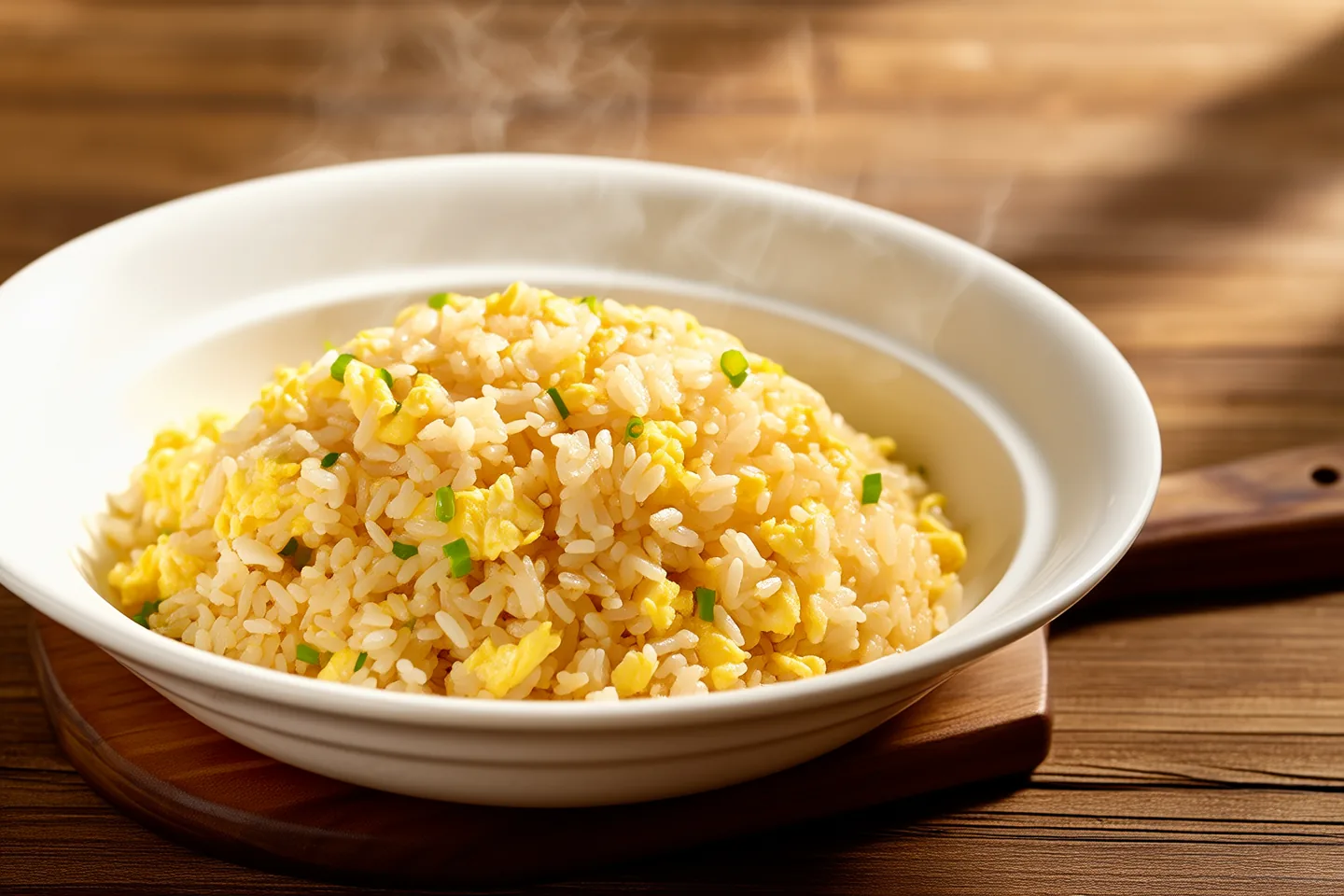
- Egg fried rice (蛋炒饭) at /recipes/egg-fried-rice. Day-old rice, egg, scallion. Dice a carrot into it if you want a vegetable in without the argument.
- Sweet and sour pork (咕咾肉) at /recipes/sweet-sour-pork. Crisp, bright, and the closest thing Chinese cooking has to a children's menu item.
- Pineapple fried rice (菠萝炒饭) at /recipes/pineapple-fried-rice. Mild curry powder and fruit, and serving it in the pineapple half once is worth the effort.
- Clay pot meatballs (砂锅狮子头) at /recipes/clay-pot-meatballs. Soft pork meatballs braised until a spoon cuts them, which is exactly the texture that works.
- Pearl meatballs (珍珠丸子) at /recipes/pearl-meatballs-sticky-rice. Pork rolled in glutinous rice and steamed: sticky, mild, and fun to pick up with chopsticks.
- Sweet corn pork bone soup (玉米排骨汤) at /recipes/sweet-corn-pork-bone-soup. Sweet from the corn, no seasoning decisions required, and it reheats on a Tuesday.
- Scallion pancakes (葱油饼) at /recipes/scallion-pancakes. Chewy, salty, handheld. Cut into wedges and they go before the main dish lands.
- Steamed mantou (白馒头) at /recipes/white-mantou-steamed-buns. Plain buns for dipping into whatever is saucy on the table, and the cheapest insurance policy in this list.
Turning a spicy dish into a mild chinese recipe
You do not need separate recipes. Four changes convert most of this site's stir-fries and braises into something a child will eat, and all four happen before the pan goes on.
- Drop the dried chilli and the peppercorns from the aromatics step. Ginger and garlic carry enough flavour on their own.
- Replace doubanjiang with a spoon of tomato paste. You lose the funk and keep the colour and the savouriness. The bean paste itself is explained at /blog/doubanjiang-101.
- Finish with a little sugar instead of chilli oil. Sweet-and-sour is a children's flavour in every cuisine, including this one.
- Serve the heat in a separate dish. Whoever wants it adds a spoon at the table, and nobody has to pick anything out of their rice.
Texture, bones, and the two-bite rule
Most refusals are about texture rather than taste. Whole fish, bone-in chicken, slippery wood ear fungus and anything with a strong gelatinous chew are the four usual suspects, and none of them needs to be on a child's plate.
- Buy boneless. A thigh fillet costs a little more and removes the single biggest objection at the table.
- Cut smaller than you think. Pieces the size of a dice cube get eaten; slices that need cutting do not.
- Offer the new dish twice, on two different days, before deciding anything. One refusal is not a verdict.
- Keep one safe item on the table. Rice, mantou, or a plain soup means nobody goes hungry while the rest gets tried.
What to keep in the pantry
These ten lean on a short list, and having it on hand is what turns the whole thing from a project into a rotation.
- Eggs, tomatoes and scallions, which cover the first three dishes on their own.
- Day-old rice in the fridge, or a bag of short-grain rice cooked the night before.
- Cornstarch for velveting meat, which is what keeps diced pork tender instead of chewy.
- Light soy sauce for seasoning. The difference between light and dark is at /blog/light-vs-dark-soy-sauce.
- A bag of frozen shrimp and a pack of minced pork, both of which defrost fast enough for a weeknight.
Pick two from the list and cook them this week: /recipes/tomato-eggs if you have ten minutes, /recipes/egg-fried-rice if you have leftover rice. Once those are automatic, the other eight turn into a rotation rather than a project. /recipes/sweet-corn-pork-bone-soup is the one to put on when nobody can decide, and the soy that goes into all of them is explained at /blog/light-vs-dark-soy-sauce. More lists like this are at /blog, and the full recipe index is at /.


