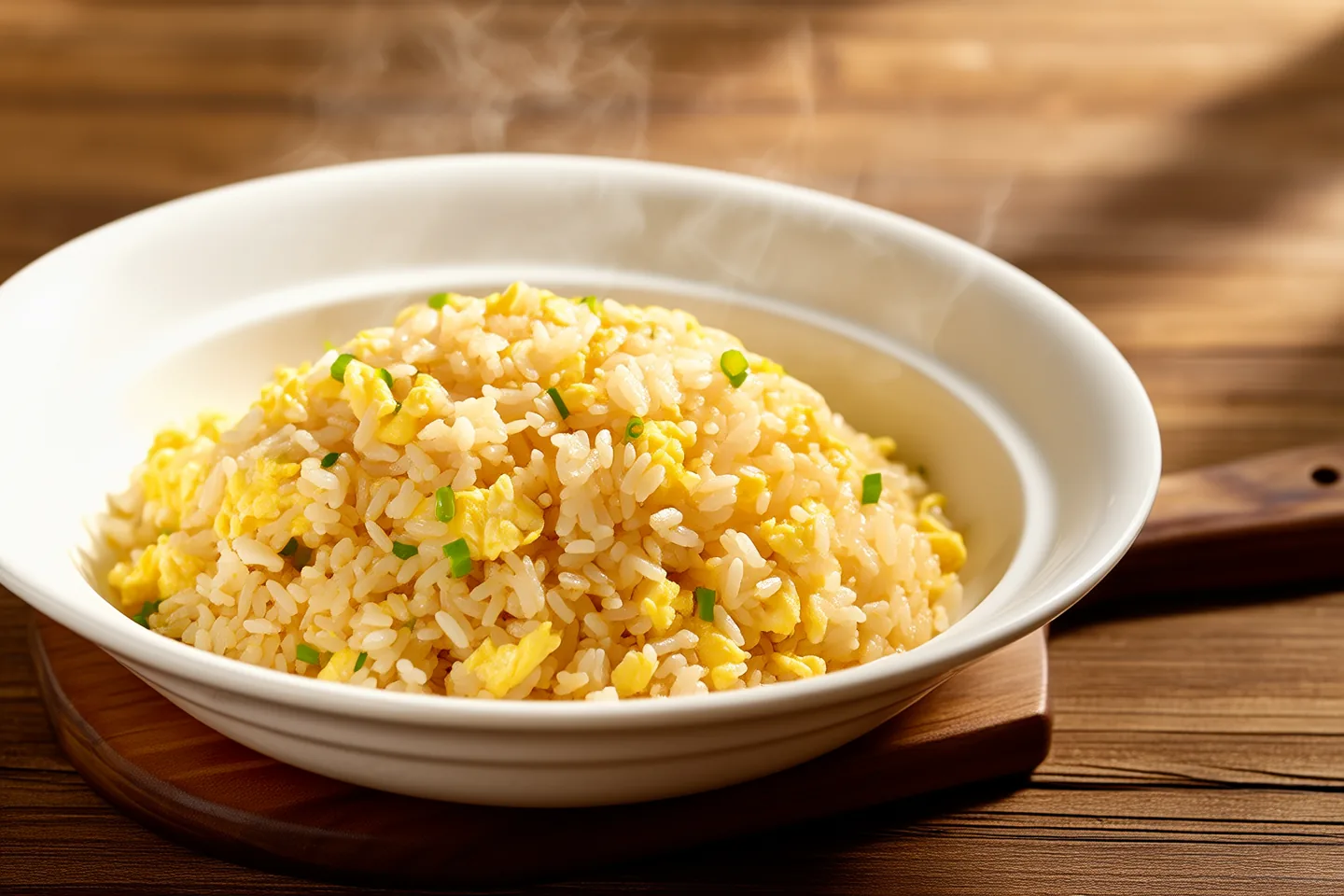
Shrimp Fried Rice
虾仁炒饭 · xiā rén chǎo fàn
This is the fried rice order that tells you whether a Cantonese kitchen cares. The shrimp should be separately cooked and folded in at the end, never boiled along with the rice — shrimp that steams in the rice turns rubbery and leaks water into the grains. Cold day-old rice, hot pan, and everything prepped within arm's reach: that is the whole dish.
Recipe author: HǎoWèi Test Kitchen
Home-cooking research team
Reviewed by HǎoWèi editorial team · Last updated 2026-08-29
Ingredients
- cooked jasmine rice, cold and day-old茉莉香米饭,隔夜冷饭🛒 local450 g
- raw shrimp, peeled and deveined生虾仁,去壳去虾线🛒 local200 g
- large eggs, beaten鸡蛋,打散🛒 local100 g
- cornstarch玉米淀粉🛒 local5 g
- carrot, small dice胡萝卜,切小丁🛒 local80 g
- frozen green peas冷冻青豆🛒 local60 g
- scallion, thinly sliced小葱,切葱花🛒 local25 g
- light soy sauce生抽🏮 asian20 ml
- toasted sesame oil香油🏮 asian5 ml
- white pepper白胡椒粉🛒 local1 g
cooked jasmine rice, cold and day-old: Refrigerate uncovered overnight to dry it out; fresh rice will clump and steam
raw shrimp, peeled and deveined: Pat very dry; frozen-and-thawed shrimp work fine if drained well
cornstarch: For velveting the shrimp
frozen green peas: No need to thaw; rinse under warm water first
🌶️ Adjust to your taste
Pick a level and we'll show exactly how much to change — no more "适量".
Spice level
Saltiness
Oiliness
Make it vegetarian
Instructions
1Toss the shrimp with the cornstarch, a pinch of white pepper and 1 tsp of the beaten egg. Leave for 10 minutes in the fridge.
虾仁上浆
🔍 Look for Low heat 10 分钟 · 10 minutesVisual: 每只虾仁裹着一层薄而略黏的浆,表面不再是生虾的水亮感Each shrimp is coated in a thin, slightly tacky film rather than a wet slurry; the surface no longer looks glossy-raw
You know it's right when: 筷子夹起虾仁时浆挂得住,不会往下滴The coating stays on the shrimp when you lift it with chopsticks and does not drip off
This is 'velveting'. It is the single biggest difference between homemade and restaurant-style shrimp.
2Heat 1 tbsp oil in a wok over high until it just smokes. Add the shrimp in a single layer and sear 45 seconds per side. Remove to a plate.
大火爆虾仁
🔍 Look for High heat 90 秒 · 90 secondsVisual: 虾仁弯成松松的C形,转为不透明粉红并带浅金边;锅底干爽不出水Shrimp curl into a loose C and turn opaque pink with lightly golden edges; the wok bottom is dry, not watery
You know it's right when: 刚好凝固即可——C形正好,卷成紧O形就是老了They are just set — a C shape means done, a tight O means overcooked
3Add the beaten egg to the hot wok and scramble for 20 seconds until just set but still glossy. Remove to the same plate.
炒蛋
🔍 Look for High heat 30 秒 · 30 secondsVisual: 蛋液膨起、基本不透明,还带几处油亮湿润;边缘无焦黄Egg is puffed and mostly opaque with a few shiny wet patches; no browned edges
You know it's right when: 整块从锅里滑出,不会一块块粘底It slides out of the wok in one mass rather than sticking in patches
4Add 1 tbsp oil, then the carrot and peas. Stir-fry 90 seconds over high heat.
炒蔬菜丁
🔍 Look for High heat 90 秒 · 90 secondsVisual: 胡萝卜丁棱角略深发亮;青豆转为鲜绿饱满Carrot dice look slightly darker and glossy at the corners; peas turn vivid green and look plump
You know it's right when: 生胡萝卜味消失,青豆在锅里擦出轻微响声A raw carrot smell is gone and the peas squeak lightly against the wok
5Add the cold rice. Press and fold with the spatula for 2 minutes until the grains separate and start to jump in the wok.
炒散米饭
🔍 Look for High heat 2–3 分钟 · 2–3 minutesVisual: 饭团散成单粒,米粒干爽、边缘微透;偶有米粒蹦起Clumps have broken into individual grains that look dry and slightly translucent at the edges; a few grains pop
You know it's right when: 听到轻微爆裂声而不是湿嗤声,也看不到大团蒸汽You hear a light crackling rather than a wet hiss, and no steam cloud forms
Break the rice up with your hands before it goes in. Fighting clumps in the wok costs you the heat you need.
6Return the shrimp and egg, pour the soy sauce around the wok edge, and toss 30 seconds. Off the heat, add sesame oil and scallion and toss once more.
合炒调味
🔍 Look for High heat 1 分钟 · 1 minuteVisual: 米粒均匀浅褐,虾仁粉红分明,鸡蛋散布成浅色小块,面上点缀葱绿Grains are evenly light tan, shrimp are pink and distinct, egg is scattered in small pale curds, and green scallion flecks sit on top
You know it's right when: 锅里飘出干香坚果味,粒粒分明——锅底不粘A dry nutty smell comes off the wok and every grain is separate — nothing is stuck to the bottom
Tips
- · Cook the shrimp separately and fold it in at the end. Shrimp simmered inside the rice goes rubbery and waters down the grains.
- · Day-old rice is not optional. Freshly cooked rice has too much surface moisture to fry.
- · Add soy sauce around the wok edge, not onto the rice. It caramelises on the metal instead of steaming into the grains.
Sources & references
Quantities, technique notes, and substitution ratios are cross-checked against established Chinese cookery references and standard food-science sources.
- Read our editorial policy
- Fuchsia Dunlop, Land of Plenty: A Treasury of Authentic Sichuan Cooking
- USDA FoodData Central — ingredient nutrition and portion data
- Traditional Chinese family-kitchen practice and regional taste records
Common questions
Is there a vegan substitute for oyster sauce?
Yes — 'mushroom oyster sauce' (often labeled vegetarian/vegan) is sold in most Asian grocers and increasingly in mainstream supermarkets. It behaves 1:1 and adds the same glossy umami. Watch labels if you're also gluten-free; most brands are GF, some aren't.
Source: HǎoWèi substitution engine
What's the difference between light and dark soy sauce?
Light soy (生抽) is the everyday salty seasoning — thin and salty, used in most recipes. Dark soy (老抽) is thicker, darker, slightly sweet, and used mostly for color (braises, fried rice). If you only buy one, get light soy. For dark soy's color: 1 tbsp light soy + a pinch of sugar + a few drops of molasses.
Source: HǎoWèi pantry guide
Why do you cook the aromatics (garlic/ginger) first on low heat?
Aromatics contain oils and sugars that turn bitter if scorched. Gentle heat (low-medium) lets garlic and ginger release their fragrance without browning too fast. If the pan is too hot, garlic goes bitter within seconds — that's why we always add aromatics first, before the main ingredients.
Source: Chinese Cooking Demystified technique library
🥢 Ask HǎoWèi
Questions about technique, ingredients, substitutions, and flavor — answered from our verified cooking knowledge base.
What to serve with it
A complete Chinese dinner in one plan — pick one from each role.
What cooks say
Made this? Leave a note.
- No comments yet — be the first!