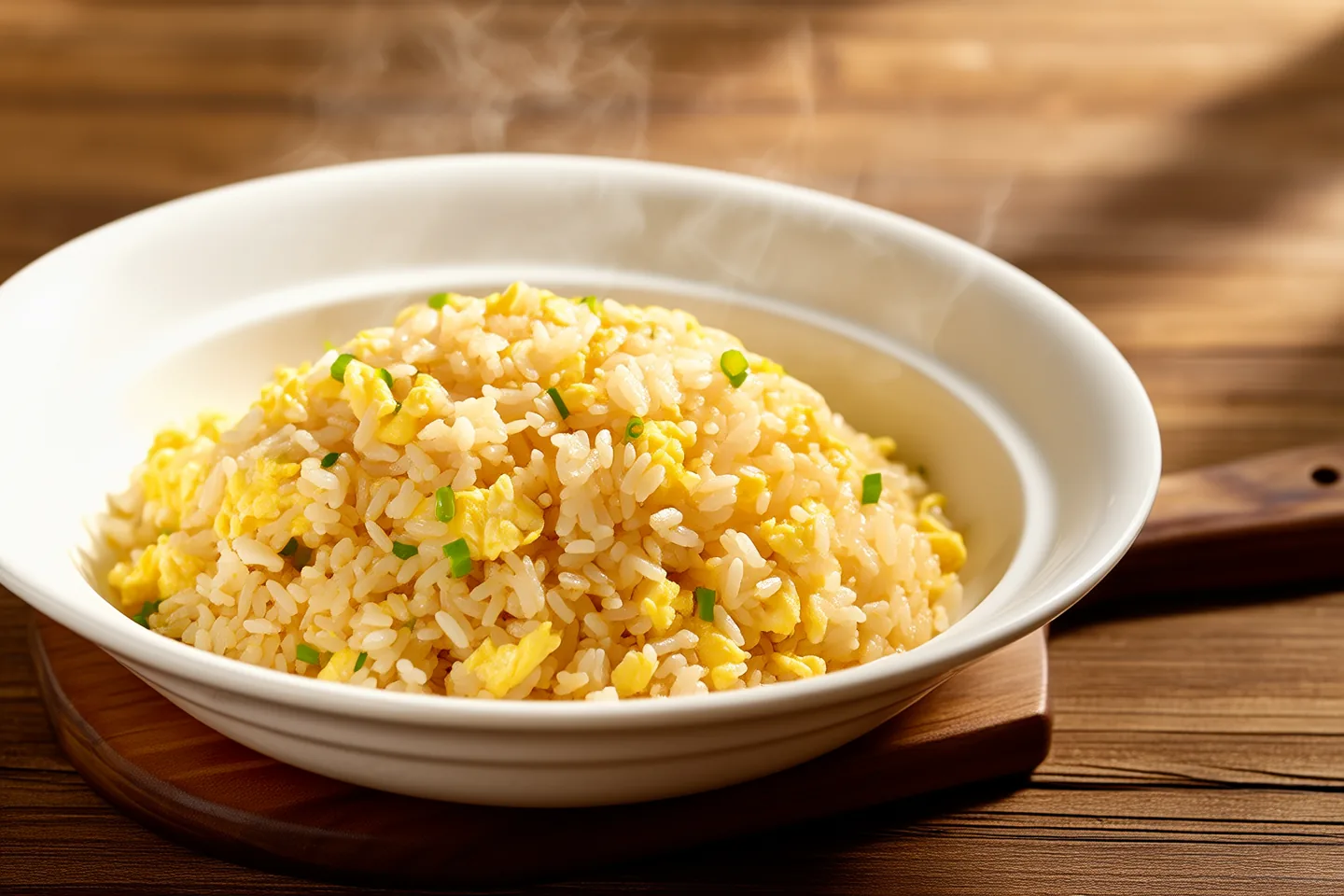
Salted Fish and Chicken Fried Rice
咸鱼鸡粒炒饭 · xián yú jī lì chǎo fàn
The dish that separates people who grew up eating Cantonese food from people who merely like it. Salted fish is not a seasoning here, it is the point — a hard, amber-coloured fillet of mackerel salted until it smells like the sea and a cellar at once. Fried until crisp and broken into the rice, it turns an ordinary plate into something you crave at 1am.
Recipe author: HǎoWèi Test Kitchen
Home-cooking research team
Reviewed by HǎoWèi editorial team · Last updated 2026-08-29
Ingredients
- cooked rice, cold and day-old米饭,隔夜冷饭🛒 local450 g
- salted fish fillet (mackerel), soaked 20 minutes咸鱼(马鲛)肉,泡水20分钟🏮 asian30 g
- boneless chicken thigh, small dice去骨鸡腿肉,切小丁🛒 local180 g
- fresh ginger, finely minced鲜姜,切细末🛒 local15 g
- large eggs, beaten鸡蛋,打散🛒 local100 g
- scallion, thinly sliced小葱,切葱花🛒 local30 g
- light soy sauce生抽🏮 asian10 ml
- shaoxing wine绍兴黄酒🏮 asian10 ml
- white pepper白胡椒粉🛒 local1 g
- neutral oil食用油🛒 local30 ml
salted fish fillet (mackerel), soaked 20 minutes: Sold vacuum-packed or in the chilled case at Chinese grocers; soak to remove excess salt, then pat bone dry
fresh ginger, finely minced: Ginger is what keeps the salted fish from tasting flat
light soy sauce: Go easy — the fish is already salty. Taste before adding more
🌶️ Adjust to your taste
Pick a level and we'll show exactly how much to change — no more "适量".
Spice level
Saltiness
Oiliness
Make it vegetarian
Instructions
1Soak the salted fish in warm water for 20 minutes, then pat completely dry and cut into 5 mm dice, discarding skin and bones.
咸鱼泡水切丁
🔍 Look for Low heat 20 分钟 · 20 minutesVisual: 鱼肉紧实琥珀色微透;切丁棱角分明不散碎The flesh looks firm, amber and slightly translucent; the dice hold sharp edges instead of crumbling
You know it's right when: 捏起鱼丁干爽紧实,不湿不滑A pinch of the dice feels dry and firm, not wet or slimy
Dry the fish thoroughly. Wet salted fish spits violently in hot oil and will not crisp.
2Heat 1 tbsp oil over medium. Add the salted fish dice and fry 2–3 minutes, stirring, until crisp and deeply aromatic. Remove, leaving the oil.
小火煎酥咸鱼
🔍 Look for Medium heat 3 分钟 · 3 minutesVisual: 鱼丁转为深琥珀色、干爽微缩;油色清亮且带浓香Dice have darkened to deep amber and look dry and slightly shrunken; the oil is fragrant and clear
You know it's right when: 鱼丁在锅里像小石子般咔咔响,气味浓但不焦The fish rattles against the wok like small pebbles and the smell is strong but not scorched
3Raise to high. In the same oil, add the chicken dice and sear 2 minutes until golden. Splash in the shaoxing wine and let it evaporate.
鸡丁爆香烹酒
🔍 Look for High heat 2 分钟 · 2 minutesVisual: 鸡丁不透明、边缘焦黄;黄酒入锅10秒内化为一阵蒸汽消失Chicken is opaque with browned edges; the wine hits the pan and disappears in a burst of steam within 10 seconds
You know it's right when: 锅底无余液,酒的生味已散No liquid remains in the wok and the raw alcohol smell is gone
4Add the ginger and stir 20 seconds, then push everything aside and pour in the beaten egg. Let it set 15 seconds and fold through.
姜末炒蛋
🔍 Look for High heat 45 秒 · 45 secondsVisual: 姜末浅金出香;蛋液凝成浅色嫩块与鸡丁相混Ginger is fragrant and pale gold; the egg has set into soft pale curds mixed through the chicken
You know it's right when: 姜的辛香冲起,蛋液不再湿润The sharp ginger aroma rises and the egg is no longer wet
5Add the cold rice and press-and-fold for 2–3 minutes until the grains separate and take on the colour of the oil.
炒散米饭
🔍 Look for High heat 3 分钟 · 3 minutesVisual: 米粒分明干爽呈浅金;锅铲刮过锅底是干净干爽的Grains are separate, dry and light gold; the wok bottom shows a clean dry surface when scraped
You know it's right when: 米饭在锅边爆响跳动,而不是冒蒸汽Rice crackles and jumps at the wok edge rather than steaming
6Return the crisp salted fish, add white pepper and soy sauce to taste, and toss 30 seconds. Off the heat, fold in most of the scallion and serve with the rest on top.
咸鱼合炒
🔍 Look for High heat 1 分钟 · 1 minuteVisual: 浅金米饭间有深琥珀鱼丁、浅色蛋块与翠绿葱花;鱼丁仍明显酥脆不发软Pale gold rice with dark amber fish pieces, pale egg and green scallion; the fish is still visibly crisp, not soggy
You know it's right when: 咬到鱼丁能听到咔嚓声,咸味圆润不刺口You can hear the fish dice crackle when you bite, and the salt level tastes round, not harsh
Tips
- · Soak and dry the salted fish. Soaking tames the salt; drying is what lets it crisp.
- · Season last and taste first. Between the fish and the soy sauce it is very easy to oversalt this dish.
- · Keep the fish crisp by folding it in at the very end, off the heat.
Sources & references
Quantities, technique notes, and substitution ratios are cross-checked against established Chinese cookery references and standard food-science sources.
- Read our editorial policy
- Fuchsia Dunlop, Land of Plenty: A Treasury of Authentic Sichuan Cooking
- USDA FoodData Central — ingredient nutrition and portion data
- Traditional Chinese family-kitchen practice and regional taste records
Common questions
Can I skip Shaoxing wine? What's the substitute?
Dry sherry is the closest 1:1 swap (fidelity ~80%). No sherry? Use a splash of white wine plus a little water, or just skip it and add a tiny extra pinch of sugar — the wine's job is depth and removing meat's gamey notes, and a good marinade covers most of it.
Source: HǎoWèi substitution engine
Why do you cook the aromatics (garlic/ginger) first on low heat?
Aromatics contain oils and sugars that turn bitter if scorched. Gentle heat (low-medium) lets garlic and ginger release their fragrance without browning too fast. If the pan is too hot, garlic goes bitter within seconds — that's why we always add aromatics first, before the main ingredients.
Source: Chinese Cooking Demystified technique library
Is there a vegan substitute for oyster sauce?
Yes — 'mushroom oyster sauce' (often labeled vegetarian/vegan) is sold in most Asian grocers and increasingly in mainstream supermarkets. It behaves 1:1 and adds the same glossy umami. Watch labels if you're also gluten-free; most brands are GF, some aren't.
Source: HǎoWèi substitution engine
🥢 Ask HǎoWèi
Questions about technique, ingredients, substitutions, and flavor — answered from our verified cooking knowledge base.
What to serve with it
A complete Chinese dinner in one plan — pick one from each role.
What cooks say
Made this? Leave a note.
- No comments yet — be the first!