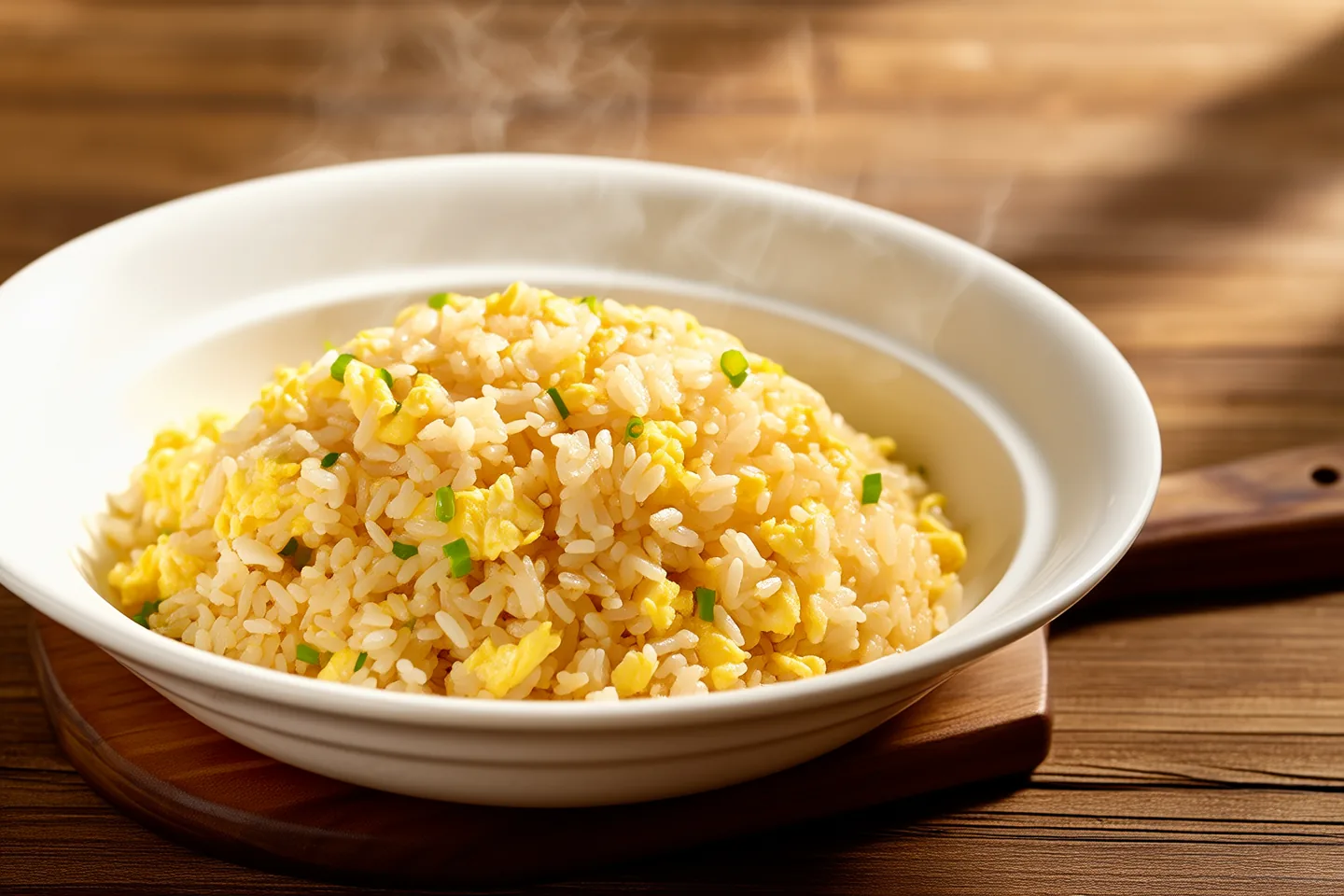
Olive Vegetable Fried Rice
橄榄菜炒饭 · gǎn lǎn cài chǎo fàn
Olive vegetable — mustard greens and olives braised slowly in soy until nearly black — is one of the great Teochew pantry secrets. Sold in small jars, it is simultaneously salty, bitter, sweet and oily. Two spoonfuls will season a whole wok of rice, which is exactly why hardly anyone outside Guangdong knows it exists.
Recipe author: HǎoWèi Test Kitchen
Home-cooking research team
Reviewed by HǎoWèi editorial team · Last updated 2026-08-29
Ingredients
- cooked rice, cold and day-old米饭,隔夜冷饭🛒 local450 g
- olive vegetable in soy (gan lan cai)橄榄菜🏮 asian25 g
- pork mince (ground pork)猪肉末🛒 local120 g
- garlic, minced蒜末🛒 local10 g
- large egg, beaten鸡蛋,打散🛒 local50 g
- frozen corn kernels冷冻玉米粒🛒 local60 g
- carrot, small dice胡萝卜,切小丁🛒 local50 g
- scallion, thinly sliced小葱,切葱花🛒 local25 g
- light soy sauce生抽🏮 asian10 ml
- neutral oil食用油🛒 local15 ml
olive vegetable in soy (gan lan cai): Sold in small jars in the Chinese grocery condiment aisle; keeps months refrigerated
pork mince (ground pork): A little fat is good here; very lean mince goes dry
light soy sauce: Only if needed — the olive vegetable is already very salty
🌶️ Adjust to your taste
Pick a level and we'll show exactly how much to change — no more "适量".
Spice level
Saltiness
Oiliness
Make it vegetarian
Instructions
1Heat 1 tbsp oil over high. Add the pork mince and break it up with the spatula, cooking 2 minutes until the fat renders and the meat browns at the edges.
煸香肉末
🔍 Look for High heat 2 分钟 · 2 minutesVisual: 肉末散成小粒、尖端焦黄,逼出的油脂清亮不浑浊Mince has separated into small crumbs with browned tips and the rendered fat is clear, not cloudy
You know it's right when: 滋滋声转为平缓的煎声——说明水汽已干,开始上色The hissing turns to a gentle fry — that means the water has gone and browning has begun
2Add the garlic and the olive vegetable. Stir-fry 60 seconds over medium heat until everything is dark and glossy.
爆香橄榄菜
🔍 Look for Medium heat 60 秒 · 60 secondsVisual: 肉末被裹成近黑发亮;蒜末已融进其中The mince is now coated near-black and shiny; the garlic has disappeared into the mix
You know it's right when: 冲起一股明显比生抽更醇厚的咸鲜香A deep savoury-salty aroma comes up that is clearly stronger than plain soy sauce
Fry the olive vegetable in oil briefly. Straight from the jar into rice it stays clumpy and tastes flat.
3Push the mixture to one side, pour in the beaten egg and let it set 15 seconds, then fold through.
炒蛋拌匀
🔍 Look for High heat 45 秒 · 45 secondsVisual: 蛋液凝成带深色斑点的小块,与发黑的肉末混在一起Egg has set into dark-flecked pale curds mixed with the blackened mince
You know it's right when: 没有湿蛋液,锅面干爽No wet egg remains and the pan looks dry
4Add carrot and corn and stir-fry 90 seconds over high heat.
炒蔬菜丁
🔍 Look for High heat 90 秒 · 90 secondsVisual: 胡萝卜油亮橙红,玉米粒饱满鲜亮Carrot is glossy orange and the corn has plumped and brightened
You know it's right when: 生胡萝卜味消失,玉米粒在锅里擦出响声The raw carrot smell is gone and the kernels squeak against the wok
5Add the cold rice and press-and-fold 2–3 minutes until the grains are separate and evenly speckled dark.
炒饭上色
🔍 Look for High heat 3 分钟 · 3 minutesVisual: 米粒干爽分明,每粒都带着细小深色斑点;整体呈斑驳的浅褐与近黑Grains are dry and separate, each carrying small dark specks; the overall colour is a mottled tan and near-black
You know it's right when: 米饭在锅边爆响,锅底不粘Rice crackles at the wok edge and nothing sticks to the bottom
6Taste before seasoning, add soy sauce only if needed, and toss 30 seconds. Off the heat, fold in the scallion.
尝味收尾
🔍 Look for Low heat 1 分钟 · 1 minuteVisual: 带深色斑点的米饭上覆翠绿葱花;盘底几乎没有浮油Dark-flecked rice with green scallion on top; the plate has almost no free oil
You know it's right when: 味道咸鲜并带淡淡苦韵——这点苦是对的,不是问题The flavour is salty-savoury with a faint bitter finish — that bitterness is correct, not a fault
Tips
- · Olive vegetable is a seasoning, not a vegetable. Start with 1½ tablespoons and taste.
- · Fry it in oil with the pork before the rice goes in — that is where the aroma comes from.
- · No salt needed until you have tasted it at the end. It is very easy to oversalt this dish.
Sources & references
Quantities, technique notes, and substitution ratios are cross-checked against established Chinese cookery references and standard food-science sources.
- Read our editorial policy
- Fuchsia Dunlop, Land of Plenty: A Treasury of Authentic Sichuan Cooking
- USDA FoodData Central — ingredient nutrition and portion data
- Traditional Chinese family-kitchen practice and regional taste records
Common questions
Why do you cook the aromatics (garlic/ginger) first on low heat?
Aromatics contain oils and sugars that turn bitter if scorched. Gentle heat (low-medium) lets garlic and ginger release their fragrance without browning too fast. If the pan is too hot, garlic goes bitter within seconds — that's why we always add aromatics first, before the main ingredients.
Source: Chinese Cooking Demystified technique library
Is there a vegan substitute for oyster sauce?
Yes — 'mushroom oyster sauce' (often labeled vegetarian/vegan) is sold in most Asian grocers and increasingly in mainstream supermarkets. It behaves 1:1 and adds the same glossy umami. Watch labels if you're also gluten-free; most brands are GF, some aren't.
Source: HǎoWèi substitution engine
What's the difference between light and dark soy sauce?
Light soy (生抽) is the everyday salty seasoning — thin and salty, used in most recipes. Dark soy (老抽) is thicker, darker, slightly sweet, and used mostly for color (braises, fried rice). If you only buy one, get light soy. For dark soy's color: 1 tbsp light soy + a pinch of sugar + a few drops of molasses.
Source: HǎoWèi pantry guide
🥢 Ask HǎoWèi
Questions about technique, ingredients, substitutions, and flavor — answered from our verified cooking knowledge base.
What to serve with it
A complete Chinese dinner in one plan — pick one from each role.
What cooks say
Made this? Leave a note.
- No comments yet — be the first!