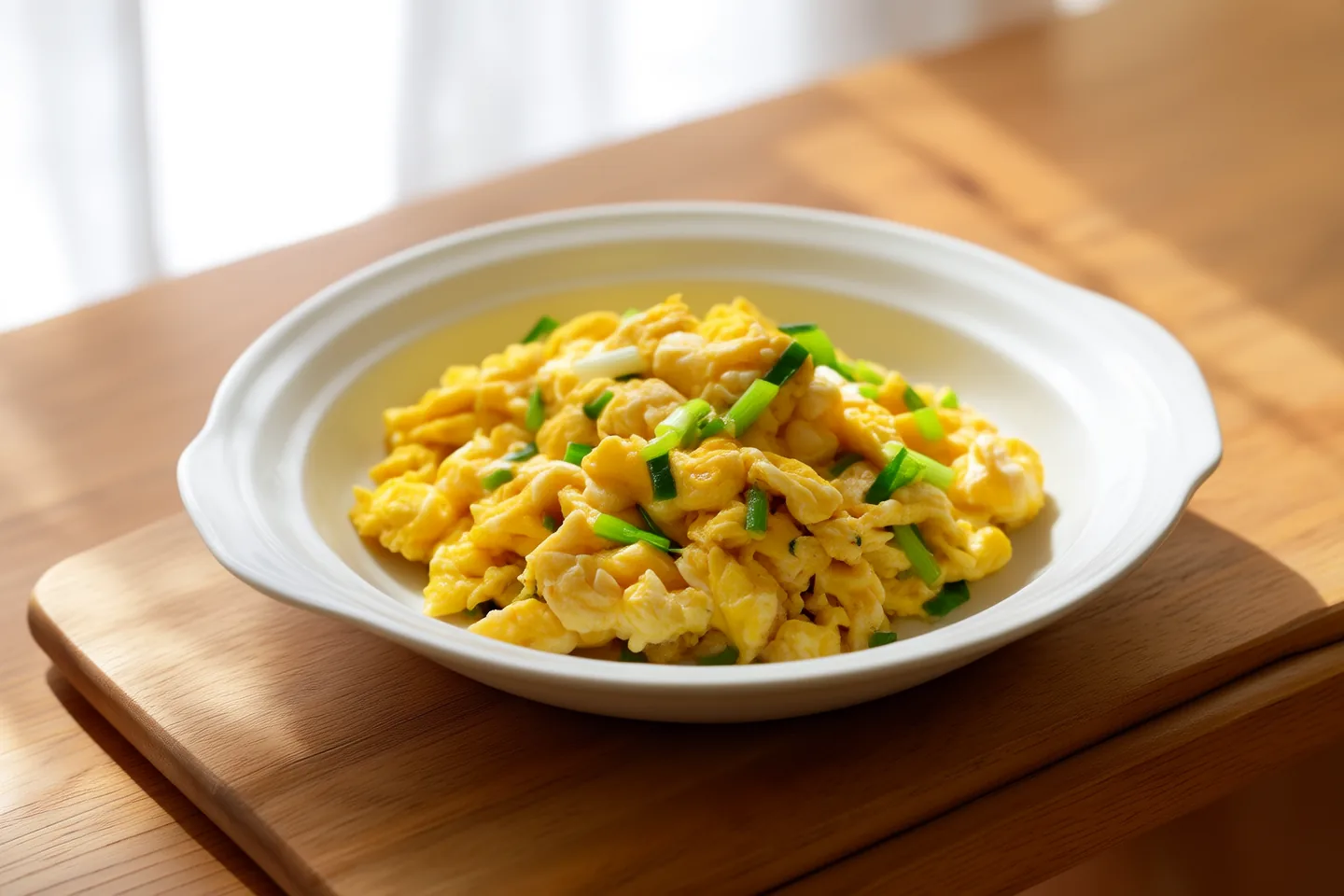
Garlic Chives Scrambled Eggs Recipe | Chinese Scrambled Eggs with Chives
韭菜炒蛋 · jiǔ cài chǎo dàn
In Shandong’s farming villages, this dish marks the first warm days of spring — when young garlic chives emerge from thawing soil. Families harvest them at dawn, stir-fry within hours, and serve with steamed millet rice. It’s believed the sharp aroma ‘opens the liver’ and wakes the body after winter.
Recipe author: HǎoWèi Test Kitchen
Home-cooking research team
Reviewed by HǎoWèi editorial team · Last updated 2026-08-29
Ingredients
- garlic chives韭菜🏮 asian180 g
- eggs鸡蛋🛒 local4 large (200 g)
- light soy sauce生抽🏮 asian3 ml
- neutral oil无味油🛒 local15 ml
garlic chives: Look for deep green, stiff stalks with tight buds — avoid yellowing or limp leaves. Substitution: 120 g leek greens (top ⅔ only) + 1 tsp minced scallion root.
light soy sauce: Use a light, aromatic soy sauce — not dark or thick.
neutral oil: Canola, grapeseed, or refined peanut oil — high smoke point essential.
🌶️ Adjust to your taste
Pick a level and we'll show exactly how much to change — no more "适量".
Spice level
Saltiness
Oiliness
Make it vegetarian
Instructions
1Rinse chives under cold water, shake off excess, and pat dry thoroughly. Cut into 4-cm lengths on diagonal — keep white and green parts together.
洗净拍干,斜切保香
🔍 Look for 1 分钟 · 1 minuteVisual: 韭菜平铺干燥,无附着水珠。Chives lie flat and dry, with no clinging water droplets.
You know it's right when: 叶片脆嫩,轻弯即断。Leaves feel crisp and snap when bent gently.
2Whisk eggs with 15 ml (1 tbsp) water and 1 g (⅛ tsp) fine sea salt until just blended — no bubbles. Set aside.
蛋液加水盐,勿起泡
🔍 Look for 20 秒 · 20 secondsVisual: 蛋液均匀浅黄,无条纹、无气泡。Mixture is uniform pale yellow with no streaks or air pockets.
You know it's right when: 离筷顺滑,无滴落或拉丝。Lifts smoothly off whisk without dripping or stringing.
3Heat wok over high heat until smoking lightly. Add oil and swirl — it should shimmer immediately.
锅热油烫,见烟即下
🔍 Look for High heat 60–90 秒 · 60–90 secondsVisual: 锅面升起淡青灰色薄烟;油如流质玻璃般顺滑流动。Thin blue-gray smoke rises from wok surface; oil flows like liquid glass.
You know it's right when: 筷子尖距油面2厘米处持续发出嘶嘶声。A chopstick tip held 2 cm above oil sizzles steadily.
4Pour in egg mixture. Let sit 3 seconds, then stir vigorously with spatula in figure-8 motion until eggs form small, fluffy curds — about 45 seconds. Transfer to plate while still slightly moist.
蛋液静置3秒,‘8’字猛炒
🔍 Look for High heat 45 秒 · 45 secondsVisual: 蛋块金黄蓬松、粒粒分明,无褐斑、无浮油。Curds are golden-yellow, airy, and separate — no browning or greasy pooling.
You know it's right when: 蛋块离锅时发出清晰‘唰’声。Eggs release easily from wok with audible ‘shush’ sound.
5Return wok to high heat. Add chives and stir-fry 30 seconds until fragrant and edges turn vivid green. Immediately return eggs, add light soy sauce, and toss 10 seconds — chives should remain crisp and bright. Serve hot.
韭菜快炒断生,回蛋轻拌即盛
🔍 Look for High heat 30 秒 + 10 秒 · 30 seconds + 10 secondsVisual: 韭菜翠如翡翠;蛋块蓬松,轻裹韭茎。Chives glow emerald-green; eggs stay fluffy and cling lightly to stems.
You know it's right when: 满屋辛香蒜气——无苦涩或焦糊味。Sharp, garlicky aroma fills the kitchen — no bitterness or burnt smell.
Tips
- · Cut chives right before cooking — their volatile oils oxidize fast and lose potency.
- · Add soy sauce *after* returning eggs — adding it earlier makes chives wilt and dulls color.
- · Use a well-seasoned carbon-steel wok or heavy nonstick pan — aluminum reacts with chive sulfur compounds and causes gray discoloration.
Sources & references
Quantities, technique notes, and substitution ratios are cross-checked against established Chinese cookery references and standard food-science sources.
- Read our editorial policy
- Fuchsia Dunlop, Land of Plenty: A Treasury of Authentic Sichuan Cooking
- USDA FoodData Central — ingredient nutrition and portion data
- Traditional Chinese family-kitchen practice and regional taste records
Common questions
Is there a vegan substitute for oyster sauce?
Yes — 'mushroom oyster sauce' (often labeled vegetarian/vegan) is sold in most Asian grocers and increasingly in mainstream supermarkets. It behaves 1:1 and adds the same glossy umami. Watch labels if you're also gluten-free; most brands are GF, some aren't.
Source: HǎoWèi substitution engine
What's the difference between light and dark soy sauce?
Light soy (生抽) is the everyday salty seasoning — thin and salty, used in most recipes. Dark soy (老抽) is thicker, darker, slightly sweet, and used mostly for color (braises, fried rice). If you only buy one, get light soy. For dark soy's color: 1 tbsp light soy + a pinch of sugar + a few drops of molasses.
Source: HǎoWèi pantry guide
Why do you cook the aromatics (garlic/ginger) first on low heat?
Aromatics contain oils and sugars that turn bitter if scorched. Gentle heat (low-medium) lets garlic and ginger release their fragrance without browning too fast. If the pan is too hot, garlic goes bitter within seconds — that's why we always add aromatics first, before the main ingredients.
Source: Chinese Cooking Demystified technique library
Ingredient swaps
Can't find an Asian-market staple? Use these.
Swap: light soy sauce
→ regular soy sauce
Ratio: 1:1 · Slightly saltier — dial salt back by a pinch.
Don't make these mistakes
The traps every home cook hits — and how to avoid them.
✗ Crowding the pan — ingredients steam instead of sear.
✓ Fix: Cook in batches; give each piece room to brown.
✗ Adding sauce too early — the wok cools and flavors dull.
✓ Fix: Push food up the wok wall, add sauce to the hot center, toss fast.
Ways to change it up
One dish, three moods.
- Add tomato for a saucy version
- Scramble with scallion whites for extra fragrance
- Serve over rice for a complete 10-minute meal
🥢 Ask HǎoWèi
Questions about technique, ingredients, substitutions, and flavor — answered from our verified cooking knowledge base.
What to serve with it
A complete Chinese dinner in one plan — pick one from each role.
What cooks say
Made this? Leave a note.
- No comments yet — be the first!
Cook next
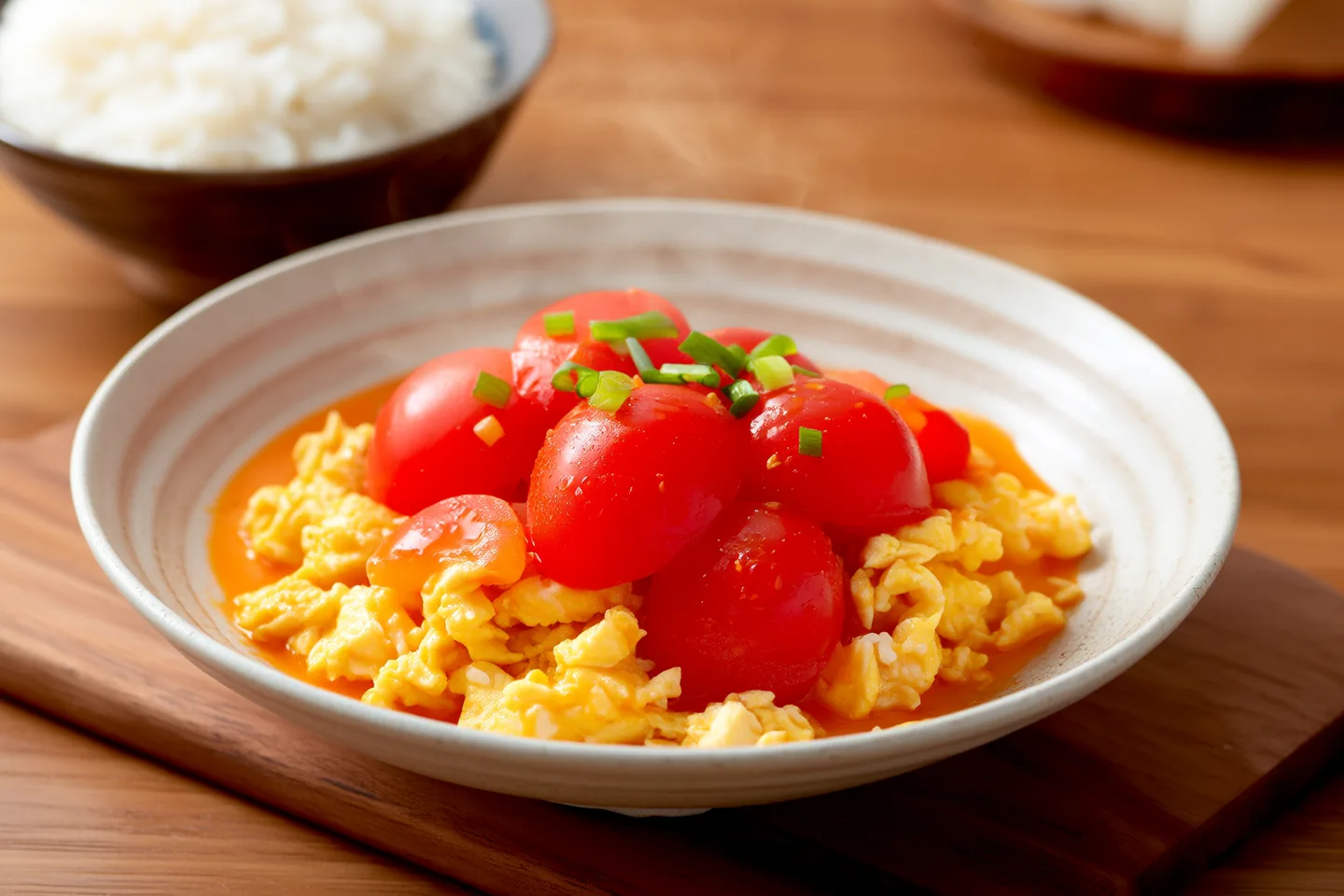
Tomato & Egg (番茄炒蛋)
番茄炒蛋 (Tomato & Egg (番茄炒蛋)) · fān qié chǎo dàn
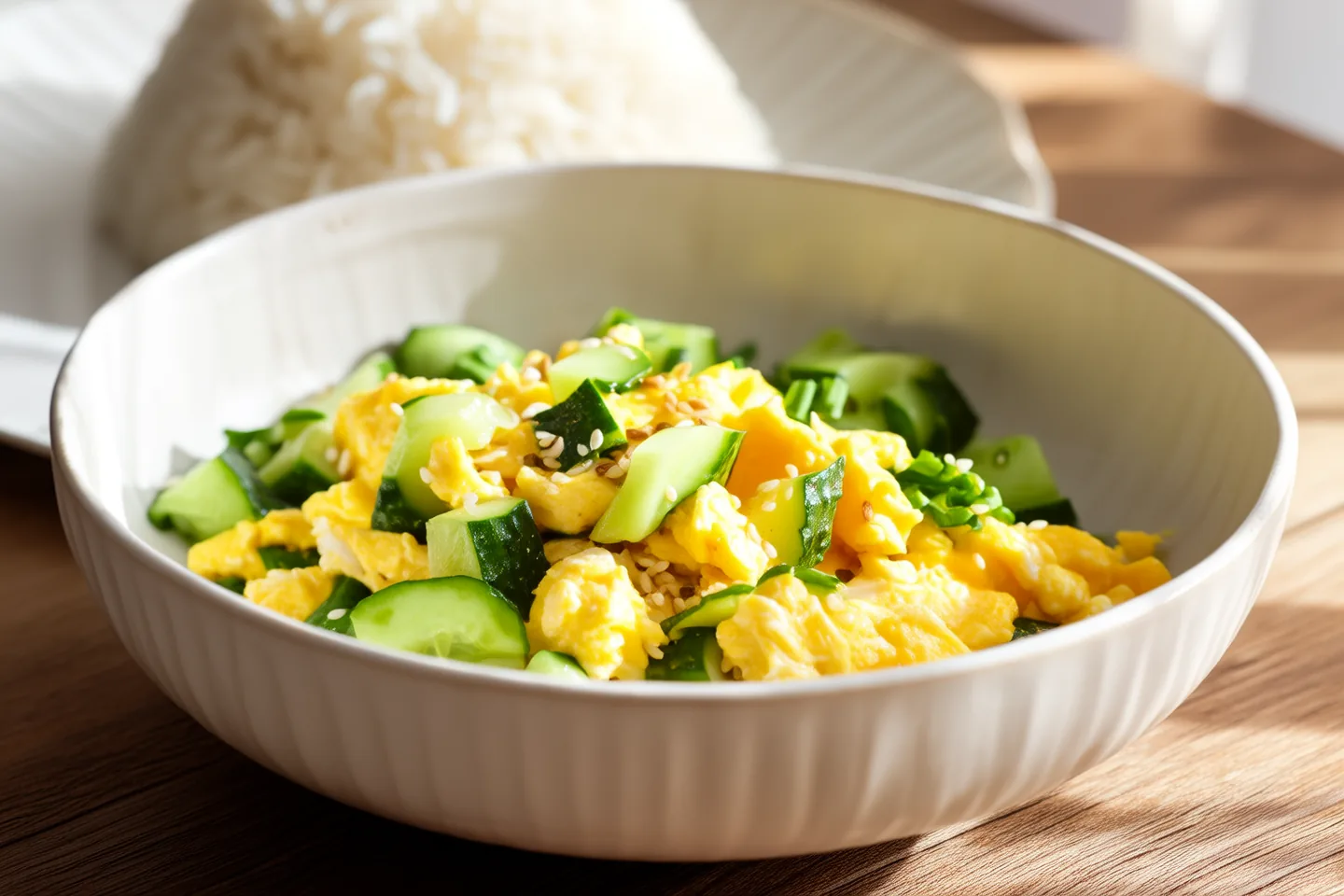
Cucumber Scrambled Eggs Recipe | Quick 15-Min Chinese Home Cooking
黄瓜炒蛋 (Cucumber Scrambled Eggs Recipe | Quick 15-Min Chinese Home Cooking) · huáng guā chǎo dàn